“A civilization without insanity, without criminals and without war, where the able can prosper and honest beings can have rights, and where Man is free to rise to greater heights, are the aims of Scientology.”
Sounds great. But I don’t want it.
A perfect world without any irrationality, without any danger, without any real challenges. Nope. I want the world to be spicy, somewhat random and dangerous. Safety makes for boring. This is why people dream of adventures, besting the criminals, slaying the evil dragon, busting the drug cartel. It’s danger, the unknown, the risk, even the occasional terror that makes this world such a challenging place for the would-be hero. To do away with all the shit would make the world a spotless, perfect and thoroughly dull place.
When Anonymous hit Scientology with Project Chanology, they wrecked havoc in a lulzy and Chaotic Neutral way. They broke new ground and actually made life exciting for Scientologists around the world. Now that they have moved on elsewhere, what is left is a ghost town.
Scientology tries desperately to make the world unexciting. Scientologists are hiding from the Internet, from picketing “SPs” and old ladies, walking the very tight and narrow, creating a super-controlled, surveillance society and false security inner world á la the Truman Show. Much like the US have been busy building after 9/11.
While L. Ron Hubbard was alive, there was always the chance that he would develop the next breakthrough that would finally realize the Scientology goal of a Cleared Planet (a world free of negative problems).
When Hubbard died, David Miscavige took the helm. Now we had the go-to guy who could bring that goal into focus.
With the release of OT 8 in 1988 on board the newly acquired ship Freewinds, Scientologists were sure that World Clearing was imminent.
When Miscavige re-released Hubbard’s books in 1989, the goal of a Cleared Planet became real. And with the release of the Key to Life and Life Orientation courses in 1990, the goal was sure to be reached in no time.
And when the long-standing arch-enemy of Scientology, the IRS was defeated in 1993, the Church of Scientology was granted tax exempt status in the US. Now there was no barriers to Clearing planet Earth.
But all was still not well in the world of Scientology. Expansion still didn’t occur. The population was increasing so many times faster than the church could produce Clears. Something had to be done.
The Golden Age of Tech (1996), followed by the Golden Age of Tech for OTs. Now the scene was set for a straight-up vertical expansion. Hopes were refueled, but no expansion in sight.
The Ideal org strategy! Sure to expand Scientology into the realm of Planetary Clearing.
Then the Golden Age of Knowledge with a thorough overhaul of all Hubbard’s material and with all Scientologists ordered to restudy everything from scratch.
Still no impact on the society.
Photo by Anette Iren Johansen
Finally we have the release of the long awaited Super Power rundowns accompanied by the Golden Age of Tech, phase II. NOW everything is different. NOW we can FINALLY achieve a Cleared Planet.
Give it a few years and the die-hard gung-ho Scientologists still in the Truman Show will start to question even this lates monumental break-through. It will leave the Pope of Scientology with no other choice than to play his final card – the release of OT 9 & 10. It wouldn’t matter that no one knows what OT 9 & 10 is or should be. He will surely release Something. To calm the diminishing masses and instill yet another round of refueled hope. Finally, finally, finally we will be able to Clear the Planet.
A few years after the final card has been played, even the most ardent supporters will get the drift… there will never be any Cleared Planet. And they too will leave. Or revolt. And we will see the end of Scientology as we know it.
Perhaps 10 years from now. Unless David Miscavige gets indicted for some of his crimes before then.
——–
Looking forward to speaking tonight at the Flag Down 2014 conference 🙂
(This blog post could and should contain lots of links to explain all the details. But being somewhat bored with the theme, I leave it up to the reader to Google what they need).
This weekend Anette and myself will visit the Sunshine State and stay for the first part of Flag Down 2014.
We will be joined by a Norwegian film crew, documenting our every move. I will be speaking on the first day of the six-day event along with prominent speakers on the subject of Scientology. It should prove to be an interesting experience.
If you’d like to meet for a coffee, please contact me. I love to meet with new people and make new friends.
I shared a video on Facebook yesterday that stired more than 50 comments in a very short time.
I posted this: “And we cling to our orderly rules and safe precautions. Who said we need traffic lights and stop signs.”
The video is pertinent to the book I’m reading, “Antifragile”. Let me know what you think.
On another note – Scientology: I have written many times that I believe anything can help a person – anything the person believes can help him. It is a matter of coercing the person into trusting a method or scheme or person or thing and he will admit that it helps him. And thus it does. The person is actually coerced into believing in his own powers to change his life on a via. It seems easier to coerce the person into trusting some via – some other, outer thing – than directly trusting his own abilities. Trusting his own requires more of that very scarce commodity called responsibility.
Now to my point: Scientology is a product of its times. Just as Hubbard was a man of his. The 50’s, 60’s and the 70’s. It is a new age religion that focus on the dangers of the cold war era, the imminent dangers of atomic war, the energy crisis, the us versus them of the US versus the Communists. The focus on Taylorism, whipping people into production, the worshiping of systems, of machine organizations, efficiency at any cost. All in the name of saving the world because the world is in such a dire need.
But not anymore. Scientology posed solutions to a different era. It is much harder to sell 40-year old solutions in today’s society. Especially when they are sold as fixed, permanent and timeless solutions to any problem imaginable. Thus it becomes harder by the year to coerce a person into unleashing his inner powers via Scientology. Other, more modern coercions is emerging and more will come.
Serene nature. Great company. The boys, Anette and her oldest brother’s family. Looking forward to relaxing, reading Antifragile, sledding, enjoying the company. Stuff that Scientologists never really get to do with a clean conscience. I don’t think the world needs any saving. It needs enjoyment.
The Youtube channel “Computerphile” has some cool videos. This one explains very well what Reverse Polish Notation (RPN) is and how it works. The concept is central to the traditional HP calculators, something dear to my heart 🙂
Notice how I am drifting away from blogging about Scientology. Scientology blog posts generate a hell of a lot more action than any post on RPN of HP calculators. But it’s the logical evolutions as Scientology drifts away into the sunset. The church is dying and anything of value in the subject itself will find its way into the common pool og human knowledge. And all will be fine.
Recently I had the pleasure to meet with the leader of the main opposition party in Vietnam, Mr. Do Diem of the Viet Tan. He gave a talk to a small Vietnamese group living in Norway, and with the help of an inspiring person, Lap Huynh, I was invited to the event.
Through reading up on the country of Vietnam and with the help of Lap and Mr. Do, I can share some of the similarities I can see with a subject well known to most of my readers; The Church of Scientology.
Mike Rinder has compared the Church of Scientology (CoS) to North Korea. While the two can certainly be compared, the CoS compares much better to Vietnam. Here is why:
Both the CoS and Vietnam looks nice on the outside. The CoS looks posh, has Tom Cruise, John Travolta, glamorous buildings and nice, welcoming people. Vietnam is a wonderful tourist destination with gorgeous nature, great healthy food and nice welcoming people.
Both have a One Party Rule without tolerance for dissidents or free speech.
Both have severe punishments for those who dare stepping out of line.
Disconnection from people with opposing views is rampant in both.
Both have a growing insurgence and the people in power tries desperately to squash dissidents with similar tactics.
Both are heading for a free speech revolution where the ruling powers will face a meltdown.
Looking good on the outside, rotten on the inside and heading for a revolution.
The question for both is not whether it will be a revolution, but whether it will be violent.
I strongly support free speech and I will lend my support to the opposition in Vietnam.
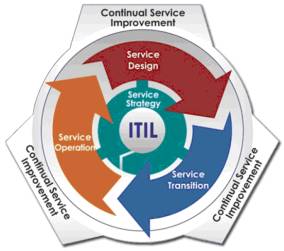
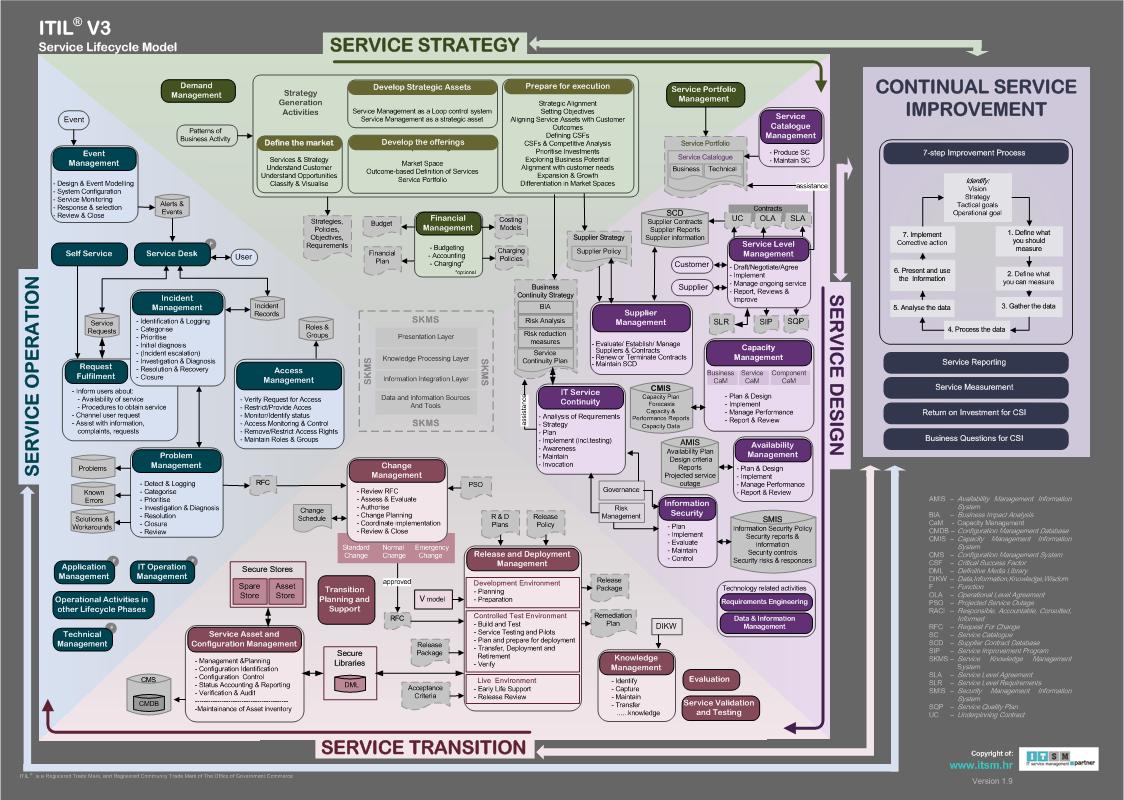
It comprises 5 books of Shakespearian English flanked by huge amounts of models, figures and diagrams. It is unwieldy and complex, leaving the reader in awe of its awesome.
ITIL has thousands of followers organized in country chapters of the IT Service Management Forum. Piles of papers are written every year, ITIL projects abound, and it remains a huge industry with vendors eager to leech off the ignorance of customers. And while organizations experience real IT challenges, they all too often jump to the conclusion that ITIL is the savior.
Problem with Peter.. Peter will not take responsibility? Enforce ITIL!
Trevor and Jack won’t work together? Go for ITIL!
Lack of IT documentation? ITIL!
Sandra shows lack of motivation? ITIL!!
Ben is a horrible manager? ITIL!!!
The less passionate employees are about their job, the less they feel a strong purpose, the less they take responsibility, the more ITIL seems required.
The ITIL congregation knows that it has the ultimate solution to every issue facing an IT organization. ITIL is the answer. Never mind the question. Bring out the Powerpoints and hard hitting argument. Oversell like mad and brainwash the customer into a true ITIL believer. The cult of ITIL rolls on in the all to recognizable self-serving fashion.
Sounds like Scientology, doesn’t it?
While the differences are obvious, the similarities are striking. Method before result. The tool becomes more important than the objective.
ITIL has been around since the early 90’s. My experience dates back to the early 2000’s. I used to be an ITIL evangelist, but the glare and glitter wore off along with my many ITIL projects. I did several high profile and very successful projects, but they often succeeded despite of ITIL rather than because of it.
Few ITIL projects succeed in making customers happy. Most fail due to some serious faults in the very foundations of the framework. Like the responsibility model, the complexity of the framework, the lack of true customer focus, the lack of real service focus, the lack of people focus. And above all, the belief that a certain method yields a certain result when the input is unknown. One should be very careful trying to implement a mindset of industrialization in the human spheres. What works splendid in a factory may wreck havoc on human initiative, creativity and motivation.
It is more important to help and motivate people than to enforce tools, processes, methods. The belief in the superior process rather than the superior will to deliver excellent results is the hallmark of a failed ITIL project.
People matters. More than the rest.
This is not to say that ITIL doesn’t have some excellent tools and tips. ITIL is good at describing the playing field and different typical
positions for people to play. It points to some good practices in dealing with IT issues, incoming requests, changes to systems that affect many, etc. But as with Scientology, one has to tread carefully in a minefield and wade through some rubbish to get to the good bits. As Scientology fosters a culture of irresponsibility, ITIL tends to do the same. Not by teaching irresponsibility per se, but by focusing so much on everything else as to leave little room for real empowerment and create a culture of self-thinking, responsible people with initiative and guts.
ITIL purports itself as “Best Practice“, but I was there when Sharon Taylor, the Chief Architect for ITIL version 3, said that the framework contains about 60% Best Practice and some 40% Wishful Thinking.
The best that Best Practice can do is to create followers. Leaders innovate, tread new ground and through guts and allowing themselves to fail come up with ingenious ways of doing things even better. Broad ideas and principles may be great guidelines, but when a framework becomes too detailed, it looses its punch and becomes a one-size-fits-few.
ITIL has created hoards of followers. Resembling a cult. But we don’t need cults. Rather than producing followers, one should strive to make everyone a leader in his own work area – even if the person leads only himself to deliver great results.
A few days ago I came across a blog post that was distributed by the LinkedIn news feed titled, “Top 5 ITSM Tips for 2014“. It reads like a gust from the past and serves well to underline what I wrote above. Tip #1 “Cost-effectively implement best practice ITSM” starts off with a whiff of fluffy business English:
“Implementing best-practice IT service management not only ensures you are improving customer satisfaction and relationships with better reliability and quality of service, it will also give your service desk a competitive advantage.”
Say what? Implementing this will ensure customer satisfaction? The answer is given. Don’t mind asking the customer. Maybe they don’t need anything even resembling ITIL. Maybe they don’t even need an IT department. Maybe they just need more care from the IT staff. Maybe something else entirely.
I don’t think the health profession was ever as narrow minded as this. Enter the doctor’s office. He has already decided what you need. Without even a second of examination. “You sir, is in dire need of an appendectomy!”
The article goes on with tip #2, “Measure your success”. Now this sounds very good. Except:
“Measuring the success of your IT service desk will become ever more crucial as senior management hone down on overspending and look at ways to cut costs.”
The IT service desk… What if the customer got such amazing IT that a service desk was hardly ever needed? How about instead asking the customers what they think about the IT services and measure that instead?
Then tip #3 reads “Manage ITIL like never before”. So, instead of managing customers, and IT staff, we are lead to believe that ITIL is something to manage. Actually, it is the thing to manage. You don’t really manage ITIL or even processes. It’s like stating that the soccer manager should manage ball passing like never before. Nope. Manage the players like there was no tomorrow.
“Deal with the increased demand for accelerated delivery” is tip #4. Sound advice as long as your customers needs are assessed and as long as you are not relying on rubber stamp conclusions from analysts. Your customers matters. More than Gartner statistics.
And finally, the sales pitch for the ITIL certification industry: “Qualify your team”. If that would only advise the reader to qualify your team toward what your customers really need. But no, it means getting your staff through multiple choice questionnaires to pass a theoretical exam. A great exercise to produce followers. A louse exercise to enable IT staff to handle customers better.
The article manages to miss the major point in making IT successful – that what is really needed is motivated people that take 100% responsibility for delivering amazing service to their customers. The area of IT thrives through creative genius, people with heart, people who give it all to deliver excellent products and services, interested staff, real and honest communication and people with guts.
ITIL is traditionally very introverted. Not surprising given it’s a framework for an industry overrepresented with people having a hard time picking up girls. More extroverted contributors have come on board in recent years, but as the framework piles on with complexity, it still suffers from the internal focus.
To enhance IT, we need to inspire dedicated customer focus and a culture marked by 100% responsibility.
It is possible to make a closed belief system thrive and expand in the absence of open access to facts. North Korea as rather successful in its push. China less so, though they have been eager to control the flow of communication.
Religions have long been able to sell beliefs contrary to fact by relying on empathy or force, group pressure or by pushing belief in tools designed to solve personal problems. Scientology is no different. Except Scientology came very late to the show. And it got blasted by open access to facts, freedom of expression, of criticism and exchange of ideas. It got hit by the Internet before it really got off the ground. And I think it serves well as a micro-example of the fate of closed belief systems.
Beliefs tend to fuel discussions, facts tend to defuse it.
And as Scientology finds itself being defused by the Internet, so will other, larger religions. But since the large religions are more established with a longer history, they will take longer to fade by exposure to the Net. But they will fade.
Proven methods will rule, even very workable methods that are currently suppressed by the mainstream will thrive and expand.
Openness and free exchange of ideas and facts drives all kinds of changes. It decentralizes power. It upsets establishments. It makes for a faster-paced world where old, closed belief systems are challenged and eventually die. The big religions can look at what has happened to Scientology and predict their future.
“A harmful intention or action against which one cannot fight back.”
A Suppressive Person (SP) is defined as:
“one that actively seeks to suppress or damage Scientology or a Scientologist by suppressive acts.”
and
“A person with certain behavior characteristics and who suppresses other people in his vicinity and those other people when he suppresses them become PTS or Potential Trouble Sources.”
And as you can see, a person affected negatively by suppression is termed a Potential Trouble Source (PTS):
“it means someone connected to a person or group opposed to Scientology. It results in illness and roller-coaster and is the cause of illness and roller-coaster.”
and
“a person […] who “roller-coasters,” i.e., gets better, then worse. This occurs only when his connection to a suppressive person or group is unhandled and he must, in order to make his gains from Scientology permanent, receive processing intended to handle such.”
So, working backward, a person that is involved in Scientology and experiences impermanent gains from it, is connected to a Suppressive person or group. This is somewhat peculiar to Scientology in that the gains are not really permanent, like with physical or other mental training. It’s not like you would expect a person to lose his ability to multiply, to do trigonometry or to ski if he were to be connected to someone opposing those activities in his life. Sure, he could lose motivation and momentum and drop out from his training, and then the skills would corrode. But to suddenly lose his ability to communicate or his ability to recognize the source of problems in life? A person who has audited out all his BTs and then becomes the target of suppression… does the BTs return? Now that is odd.
Could it be that the gains in Scientology actually comes from skillful application of the placebo effect? That the gains are to be had because one really belives one deserve them? And that deep inside we all carry the ability to change our lives if we really can muster the motivation and belief that we can? And that this motivation comes about only when we feel we deserve it?
Is Scientology gains dependent upon the person’s belief, conviction or “inner knowingness”? It would surely answer the conundrum of why one can so easily “lose gains” in Scientology.
Could it be that the scientific cloaking serves to enforce belief in its efficacy? Could the religious cloaking serve the same purpose to different target groups? The time spent surely would enforce one’s conviction that It Works. The same with all the money spent. How about the stringent management, the uniforms, the tough schedules, the bombast, the posh, celebrities and grand PR? And the guru worship? It really does seem like an impressive package that could make a believer out of most anyone. And if we do hold the powers to heal our mind and spirit, one could hardly blame the Scientology scheme for tricking the subjects into unleashing their inner powers.
On this blog I challenge Scientology beliefs. I question everything myself, and I write about it as I go along. I challenge the practice, the philosophy, the gains, the OT levels, Clear and anything else that turns up as I turn every stone. Scientologists who read this may end up questioning their own beliefs and even lose some gains. And in that aspect, this blog can indeed be looked upon as suppressive. While blogging my Scientology journey has been a great process for me, a nagging doubt remains:
Is it right to challenge another’s belief with facts, if the belief they hold serves to make their life better?
It’s a complex question and I have many views on this. But I would like to hear what you think.






![Question_Everything_by_Victawr[19]](https://isene.me/wp-content/uploads/2014/01/question_everything_by_victawr19.jpg)
 Geir Isene - uncut