Bill & David’s garage rules

Most readers of my blog knows about my passion for HP calculators. But you may not know the reasons why. First of all it’s about exploring new mathematics. Secondly, the old programmable calculators offer the most easily accessible environment for programming – the calculators are small and with a push of a button, you can start programming away. Thirdly, it’s the sturdy design and craftsmanship and the constant innovation that used to be the hallmark of HP. The very essence of Old Hewlett Packard is captured in the rules that Bill Hewlett and David Packard put up on the wall in the their first office space – a garage:

  • Believe you can change the world.
  • Work quickly, keep the tools unlocked, work whenever.
  • Know when to work alone and when to work together.
  • Share tools, ideas. Trust your colleagues.
  • No Politics. No bureaucracy. (These are ridiculous in a garage.)
  • The customer defines a job well done.
  • Radical ideas are not bad ideas.
  • Invent different ways of working.
  • Make a contribution every day. If it doesn’t contribute, it doesn’t leave the garage.
  • Believe that together we can do anything.
  • Invent.

That mindset formed the foundation of what came to be one of the most successful technology companies.

These days, we find tech businesses more focused on focus than innovation. More focused on regulating people than encouraging them. And more driven by profit than their heart.

One day I will implement this mind set in an modern technology company. I will keep you posted.

hp

Generous

Being generous.
Giving without thought of reward.
But giving.

Every person is an adventure.
Of endless possibilities.
And everything is possible.

Chill.
No Blame, Shame or Regret.
What’s done is gone.

These are my aspirations.

I believe being generous is the most important.

What’s with the fuckin’ drama?

Ten years ago my youngest son was three and sitting besides me in the front of the car on his little baby-seat. I was 20 minutes late for an important presentation for 12 eagerly awaiting important people. My phone was dead and I couldn’t call in to say I was late. I was running 5 red lights in a row, teaching my son a few swear words in the process. When I got to the final intersection, there were three cars in front waiting… on a green light! The light was fuckin’ green and they weren’t moving. I was honking the horn and about to decide to freak out when my son looked at me calmly and said: “Daddy, this is no crisis”.

All my stress inflated like air from a balloon. My body and mind went instantly calm as I turned my head to him and said “You are absolutely right – this is no crisis.” I chilled, ran the car in second gear, whistled a tune, had fun with my kid, parked the car, walked jolly and unseriously into the meeting and completely rocked the room by relating my newfound knowledge. Delivered to me by my son no less. A lesson that has served me well ever since. I’ve told this story before, but it’s worth repeating.

Nowadays I look at the apparently serious and critical situations that seems to abound. When people write to me in fits over something, when business people tie themselves into a not over details, when everyday situations gets the better of stressed-out individuals. I curiously watch when this happens to me. And then I remember my son’s words and decides to instantly chill.

The drama is very seldom warranted. “This is no crisis”.

Tools

A tool is any aid to accomplish a task. From a hammer, drill, robot or car to a process, method, equation or your own mind. A plan, a preconceived idea or an expectation are also tools. As long as a toll remains under your control, you’re fine. But when the tools start running you, responsibility and control suffers. Let’s kick this off with the dictionary definition of “tool”:

tools

TOOL (Mirram Webster)

1 a : a handheld device that aids in accomplishing a task
b (1) : the cutting or shaping part in a machine or machine tool (2) : a machine for shaping metal : machine tool

2 a : something (as an instrument or apparatus) used in performing an operation or necessary in the practice of a vocation or profession [a scholar's books are his tools]
b : an element of a computer program (as a graphics application) that activates and controls a particular function [a drawing tool]
c : a means to an end [a book's cover can be a marketing tool]
d often vulgar : penis

3 : one that is used or manipulated by another

4 plural : natural ability [has all the tools to be a great pitcher]

Origin of TOOL: Middle English, from Old English "tōl"; akin to Old English "tawian" to prepare for use — more at "taw". First Known Use: before 12th century

Let’s focus on definitions 2a and 2c here.

I could go on and on explaining the usefulness or necessity of tools, the joy of my tools (HyperList, my HP calculators, my PC, my mind and my penis), or the troubles that ensue when your tools starts taking over. I could explain how troubles in life most often come about when your mind starts running the show, rather than you remaining in control (the essence of irrational behavior). I could point to the article “Processes, Automation and Human Potential“, and show that automation must remain under someone’s responsibility, lest it will bereft the user of will. Etc.

But for the sake of succinctness, I will leave you with a scale of “free will“:

  1. No Tools
  2. No tools needed
  3. Tools used freely
  4. Tools used compulsively
  5. Tools needed
  6. Automation
  7. Only tools

When you are in prison, you are at level 5 or 6 – the effect of tools (the prison system). When you are scared shitless of a spider on the floor, you are likewise at level 5 or 6 as your mind has taken over the control. When you use a calculator to figure out an answer, you are on level 2, 3, 4 or 5 depending on whether you could have gotten the answer without the calculator. When you use a slide show in a presentation… levels 2-5, unless you have no choice at all – as when your boss has ordered you to run those exact slides (then you would perhaps serve at level 6). When a process or method or ideology becomes more important than the result it aims to achieve, you operate at a level below 3.

In different areas of life and at different times, we are operating at different levels on this scale. Our need for tools depends on our inherent abilities, our confidence and our love of the tools we use.

Of course, tools are part of any game. To master a game, you must master the tools, and that implies being able to use the tools freely, if at all. When you are struggling in a game, you are struggling with the tools, you are unable to use them freely. And that includes your mind.

Personally, I am on a quest to nudge myself towards the top of the scale on most any area of life (except for my HP calculators). It seems to me that freedom is gained through regaining the ability to freely use the tools in a game, and by the subsequent shedding of the tools involved.

I get the ball, I pass the ball.

Perhaps the best midfielder in the world, Xavi, explains how he and Barcelona is so successful in the game of soccer: “I get the ball, I pass the ball. I get the ball, I pass the ball”.

I use his quote to make business people understand what 100% responsibility, simplicity and immediate relevance is all about. It is a simple enough statement, but it is only immediately relevant in business when you understand the meaning of the two operative words “get” and “pass”. Xavi didn’t say “I happen to get the ball, I get rid of the ball. The ball got to me, I kick it somewhere.”

Let’s take a look at the definitions of those words. From Mirriam Webster’s:

Get: To gain possession of, to seek out and obtain.

To “get” the ball means to seek out and obtain and gain possession of the ball. It is a causative action – the player takes 100% responsibility for the input – getting the ball under his control.

And for the sports definition of “pass”, we turn to Wiktionary:

Pass: The act of moving the ball or puck from one player to another.

To “pass” the ball is to take 100% responsibility for the output – that the ball passes from one’s own control to that of a teammate.

This is the essence of the article titled “Processes, automation and human potential“. It is a simple concept and very visible when it fails or succeeds in soccer. But oh so difficult to get people to understand and practice in the business world.

One doesn’t just sit around and wait for the input, one obtains the input needed to produce value in one’s job. One takes 100% responsibility for getting what one needs in order to deliver what is expected. And 100% responsibility means no blame, shame or regret – only that one gets the needed input.

And one doesn’t just pass off any package out of one’s area of responsibility. One ensures the customer really gets the value expected, or better. The customer is the recipient of the value one creates. whether internal or external to the company.

This is all about 100% responsibility. And it is simple – that’s why it works so well. And it is immediately relevant. Even in the family, among friends or in business.

Xavi really gets it, and he’s the best.

5000 reads on Scribd

I swung by Scribd.com and found that my articles now have a total of more than 5000 reads. That would account for around half the number of total reads of those articles (the rest being read on isene.com and elsewhere). If you haven’t yet looked at the articles, now is the time to nudge you to swing by the same place 😉

Writing articles: Collaboration

Writing articles in collaboration with great people

Vega

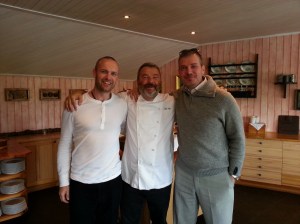
Thursday and Friday I had the pleasure to visit Vega – a beautiful island off the coast of Helgeland in the northern part of Norway. The nature is stunning, but even above that – the food we got at Vega Havhotell was the best I’ve ever had.

Vega

Brendan and I was invited by the amazing Per Ulrik Arntsen to speak at the itSMF conferance. Brendan did some out-of-the-box stuff and ended up getting the whole audience sing along with an off-the-wall song, while I jumped around and covered the importance of communication.

Anna and Jon Aga

We stayed at a nice hotel run by a warm and energetic couple. Anna is funny and very service minded. Jon is very direct, funny and an excellent cook. He makes all the food from fresh local ingredients. The dinner we got was legendary, and the talk Jon gave before we got the food set a new standard for how to treat customers. I hope to record an interview with Jon one day so that many more people can get to experience his no-compromise attitude toward service.

All-in-all – it was a very memorable trip. I’ll be back there in the not unforeseeable future.

If you ever visit Norway, make an effort to drop by Vega. You’ll be blown away.

What culture does it foster?

ITIL is lacking in people-focus. PRINCE2 is lacking in creativity, LEAN is missing out on innovation, and Scientology management philosophy (LRH admin tech) is lacking in compassion.

Objection! ITIL talks about people, and that people are a core asset to any organization. PRINCE2 certainly inspires creative projects to be more successful. LEAN is stressing innovation through continual improvement. And L. Ron Hubbard covers the concept of affinity and also compassion in several places like the policy on “the model hat of an executive”.

All true. But a grape in an apple pie does not make it grape pie. And a mention of love does not make Anders Behring Breivik a loving person.

Because it is not what a subject happens to cover. It is what it predominantly covers. One has to look at the whole picture and see what the major portions are dealing with. The major parts of a subject marginalizes the parts that happens to be included. The intentions behind a subject is made evident by the major focuses of that subject. And that is the culture it fosters.

Scientology management philosophy fosters robotic and militant obedience to policy. LEAN fosters blinders and a squeezed organization, PRINCE2 fosters bureaucracy and ITIL fosters red tape through process compliance. None of them makes for an inspiring, creative and people-focused organization. Because even though these concepts are mentioned, they are dwarfed by the major parts that focus on hard and cold values of yestercentury.

It seems that most organizational frameworks are created as a substitute for more directly handling the problems of responsibility and communication between people.

This is not say that all such frameworks are useless. They may very well contain useful tools. But organizational frameworks will always be inferior to human attention, a warm heart and a hug.

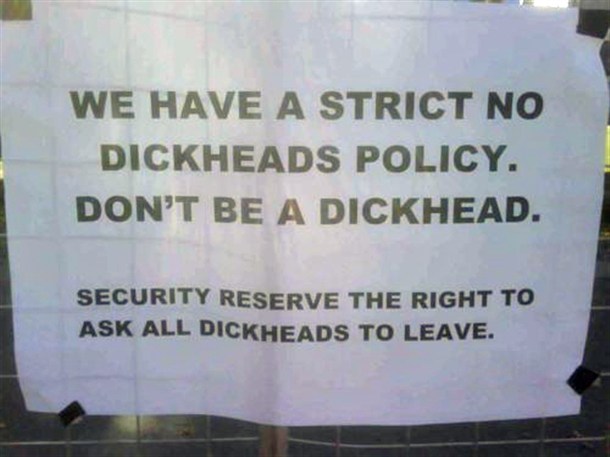
In the spirit of strict policy:

In the spirit of strict policy

An epiphany of sorts on help

I have had an interesting discovery about myself recently; Despite the fact that I have received countless hours of help in the form of Scientology counseling since 1984, I have grown increasingly hesitant to receive help from others proportional to how much I have been helping other people in my life.

The more help I give and the more I listen to others with issues at hand and the more I give advice, the less easy it becomes to accept others helping me. It’s like my mission in life has become so focused on helping others that it feels awkward to have that flow reversed.

The support I offer is mostly very practical and very direct – both in business and for interesting individuals. It ranges from coaching individuals to success, coaching teams to perform at their best and organizations to break important barriers. I am very lucky to be able to do this together with Brendan in our new company. But as my focus on helping others sharpens, my acceptance for others helping me seems to dull. This is something I have to work on – to be as open to others supporting me as I am eager to support others.

I don’t have any specific reason for sharing this, and I’m not particularly trying to rally any discussion. But it does feel nice to be able to let others in on my inner thoughts.