Do we settle for “just good enough” and “meeting expectations”? Or do we outperform ourselves and amaze the customer?
There are indeed rational arguments why we should merely meet the customer’s expectations and not go the extra mile. It is more costly to give awesome service. It puts an unnecessary pressure on the service delivery organization.
And while advocates of such rationale keep praising mediocrity, the amazing suppliers keep impressing customers and gaining market share.
Delivery contacts or Service Level Agreements should represent a worst case scenario, while the supplier should always strive for better, faster, more amazing. Or someone else will.
And if it seems too hard to keep up with the spoiled customer’s ever increasing expectations, then it is better to talk to the customer about this than forcing them to become less spoiled by delivering mediocre service.
Aim for “just enough” and you’ll miss half the time. Aim for amazing and you may just reach it.
“I spent hours meticulously drawing an old castle, three levels of floor plans and carefully populating every room with Orcs, Trolls, Undeads and treasure. But even more hours was invested in planning how the players would approach the castle with their Role-Playing characters. The front doors would be unlocked and the characters would discover that, sneak inside, engage in a small fight with two filthy Orcs playing dice instead of guarding the castle, commence to the guard room, find a treasure, get surprised by a lutenant Orc walking into the room, etc. The plan was a masterpiece, but upon reaching the castle, I was taken completely off guard. They walked around to the back side, got out a grappling hook and climbed in through a small kitchen window on the second floor and… completely wrecked my plan! Dang! I hated unpredictable players.”
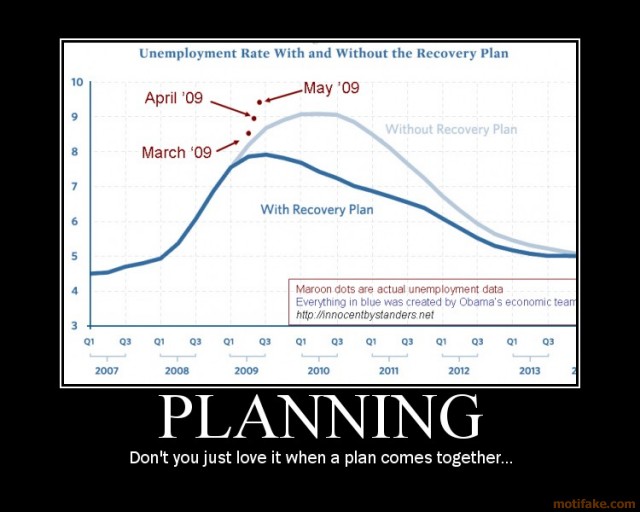
The purpose of planning is to increase predictability. Regardless of the name and the scope – strategy, plan, tactic, game-plan – the purpose is to avoid unpredictability. With the knowledge of Now, one seeks to make decisions into the future. The aim is to focus effort and to limit dispersement.
Sounds all good, perhaps. But there is a flip-side to this coin. When one focuses, one also limits and excludes.
In opting for predictability, you trade in intelligence, creativity and agility. By limiting future choices, you limit improvisation and potential genius. This is why most creative geniuses prefer not to work in large corporations or set structures, but rather in lean and mean startups or prefer to work on their own.
What you gain in focus and stability and predictability in the short run, you lose in attainment of long-term valuable skills.
To quote Ole Wiik, “one must practice what one wants to be good at”. As you focus your training in one area, you become less adept in other areas. Planning makes you better at planning. But it makes you less adept at improvising. By avoiding the unpredictable, you will never get good at tackling the unpredictable. Your mental dexterity will suffer proportionately with your increasing planning skills.
Another factor to consider is that decisions are always sharpest with the best and up-to-date data readily at hand. Thus, any decision made by planning, decisions into the future can never be potentially as good as a decision made in the Here and Now with fresh data and input. Limiting mental dexterity by planning and adding some blinders will make you less sharp mentally. Planning adds preferences, it adds filter that makes fresh input looks dimmer while you become dumber. In an interview with Chess.com, Magnus Carlsen said: “Having preferences means having weaknesses.”
Planning is a tool, a crutch. It enforces a view of the future based on today’s data. It stimulates preconceived ideas, adds a filter for new data, tend to help you avoid unpredictability and helps you never get good at tackling surprises. Tools and crutches are needed if you cannot cope with a situation without them. But right there it should make the alarm bells go off. Instead of getting addicted to the tool of planning, how about starting to practice tackling the unpredictable? Scary shit. I know. But it does add spice to life and skills to you.
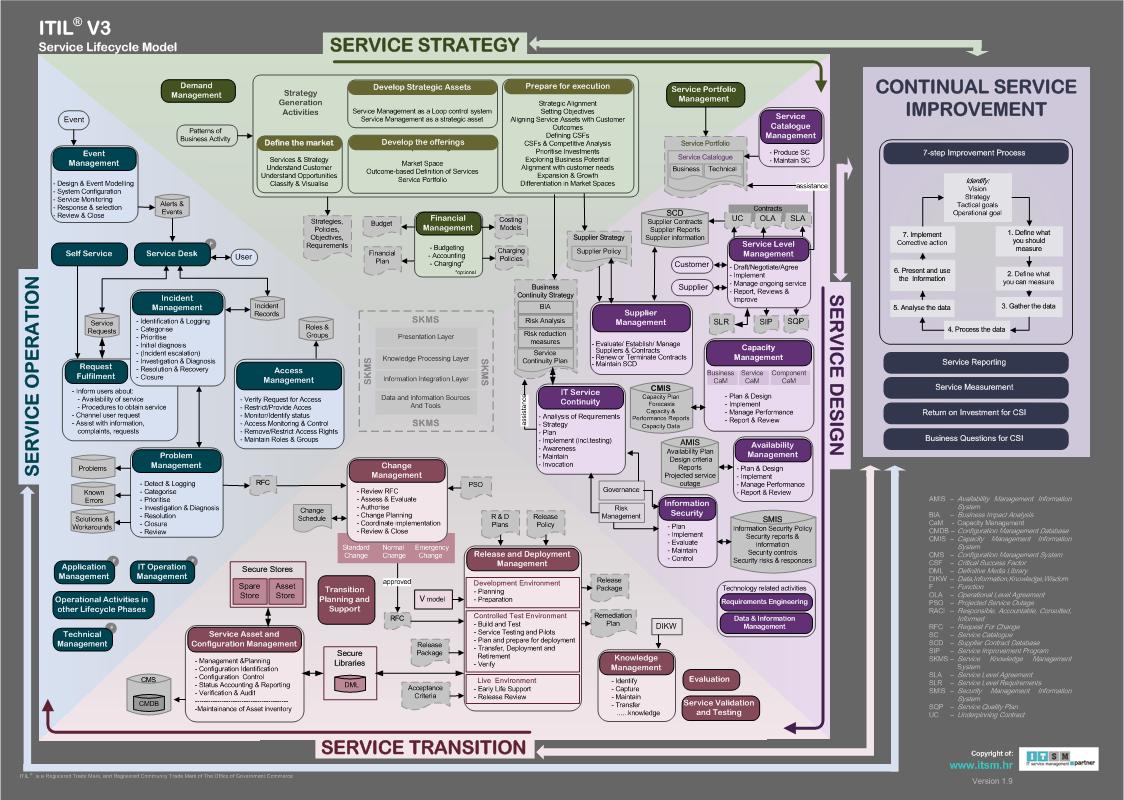
It comprises 5 books of Shakespearian English flanked by huge amounts of models, figures and diagrams. It is unwieldy and complex, leaving the reader in awe of its awesome.
ITIL has thousands of followers organized in country chapters of the IT Service Management Forum. Piles of papers are written every year, ITIL projects abound, and it remains a huge industry with vendors eager to leech off the ignorance of customers. And while organizations experience real IT challenges, they all too often jump to the conclusion that ITIL is the savior.
Problem with Peter.. Peter will not take responsibility? Enforce ITIL!
Trevor and Jack won’t work together? Go for ITIL!
Lack of IT documentation? ITIL!
Sandra shows lack of motivation? ITIL!!
Ben is a horrible manager? ITIL!!!
The less passionate employees are about their job, the less they feel a strong purpose, the less they take responsibility, the more ITIL seems required.
The ITIL congregation knows that it has the ultimate solution to every issue facing an IT organization. ITIL is the answer. Never mind the question. Bring out the Powerpoints and hard hitting argument. Oversell like mad and brainwash the customer into a true ITIL believer. The cult of ITIL rolls on in the all to recognizable self-serving fashion.
Sounds like Scientology, doesn’t it?
While the differences are obvious, the similarities are striking. Method before result. The tool becomes more important than the objective.
ITIL has been around since the early 90’s. My experience dates back to the early 2000’s. I used to be an ITIL evangelist, but the glare and glitter wore off along with my many ITIL projects. I did several high profile and very successful projects, but they often succeeded despite of ITIL rather than because of it.
Few ITIL projects succeed in making customers happy. Most fail due to some serious faults in the very foundations of the framework. Like the responsibility model, the complexity of the framework, the lack of true customer focus, the lack of real service focus, the lack of people focus. And above all, the belief that a certain method yields a certain result when the input is unknown. One should be very careful trying to implement a mindset of industrialization in the human spheres. What works splendid in a factory may wreck havoc on human initiative, creativity and motivation.
It is more important to help and motivate people than to enforce tools, processes, methods. The belief in the superior process rather than the superior will to deliver excellent results is the hallmark of a failed ITIL project.
People matters. More than the rest.
This is not to say that ITIL doesn’t have some excellent tools and tips. ITIL is good at describing the playing field and different typical
positions for people to play. It points to some good practices in dealing with IT issues, incoming requests, changes to systems that affect many, etc. But as with Scientology, one has to tread carefully in a minefield and wade through some rubbish to get to the good bits. As Scientology fosters a culture of irresponsibility, ITIL tends to do the same. Not by teaching irresponsibility per se, but by focusing so much on everything else as to leave little room for real empowerment and create a culture of self-thinking, responsible people with initiative and guts.
ITIL purports itself as “Best Practice“, but I was there when Sharon Taylor, the Chief Architect for ITIL version 3, said that the framework contains about 60% Best Practice and some 40% Wishful Thinking.
The best that Best Practice can do is to create followers. Leaders innovate, tread new ground and through guts and allowing themselves to fail come up with ingenious ways of doing things even better. Broad ideas and principles may be great guidelines, but when a framework becomes too detailed, it looses its punch and becomes a one-size-fits-few.
ITIL has created hoards of followers. Resembling a cult. But we don’t need cults. Rather than producing followers, one should strive to make everyone a leader in his own work area – even if the person leads only himself to deliver great results.
A few days ago I came across a blog post that was distributed by the LinkedIn news feed titled, “Top 5 ITSM Tips for 2014“. It reads like a gust from the past and serves well to underline what I wrote above. Tip #1 “Cost-effectively implement best practice ITSM” starts off with a whiff of fluffy business English:
“Implementing best-practice IT service management not only ensures you are improving customer satisfaction and relationships with better reliability and quality of service, it will also give your service desk a competitive advantage.”
Say what? Implementing this will ensure customer satisfaction? The answer is given. Don’t mind asking the customer. Maybe they don’t need anything even resembling ITIL. Maybe they don’t even need an IT department. Maybe they just need more care from the IT staff. Maybe something else entirely.
I don’t think the health profession was ever as narrow minded as this. Enter the doctor’s office. He has already decided what you need. Without even a second of examination. “You sir, is in dire need of an appendectomy!”
The article goes on with tip #2, “Measure your success”. Now this sounds very good. Except:
“Measuring the success of your IT service desk will become ever more crucial as senior management hone down on overspending and look at ways to cut costs.”
The IT service desk… What if the customer got such amazing IT that a service desk was hardly ever needed? How about instead asking the customers what they think about the IT services and measure that instead?
Then tip #3 reads “Manage ITIL like never before”. So, instead of managing customers, and IT staff, we are lead to believe that ITIL is something to manage. Actually, it is the thing to manage. You don’t really manage ITIL or even processes. It’s like stating that the soccer manager should manage ball passing like never before. Nope. Manage the players like there was no tomorrow.
“Deal with the increased demand for accelerated delivery” is tip #4. Sound advice as long as your customers needs are assessed and as long as you are not relying on rubber stamp conclusions from analysts. Your customers matters. More than Gartner statistics.
And finally, the sales pitch for the ITIL certification industry: “Qualify your team”. If that would only advise the reader to qualify your team toward what your customers really need. But no, it means getting your staff through multiple choice questionnaires to pass a theoretical exam. A great exercise to produce followers. A louse exercise to enable IT staff to handle customers better.
The article manages to miss the major point in making IT successful – that what is really needed is motivated people that take 100% responsibility for delivering amazing service to their customers. The area of IT thrives through creative genius, people with heart, people who give it all to deliver excellent products and services, interested staff, real and honest communication and people with guts.
ITIL is traditionally very introverted. Not surprising given it’s a framework for an industry overrepresented with people having a hard time picking up girls. More extroverted contributors have come on board in recent years, but as the framework piles on with complexity, it still suffers from the internal focus.
To enhance IT, we need to inspire dedicated customer focus and a culture marked by 100% responsibility.
Every year the organization “Operasjon Dagsverk” (eng. Operation Day’s Work) arranges for students in junior high and highschools to contribute one day’s work to a charity cause.
The students takes responsibility for finding a place to work for a day. The company that accepts the student pays NOK 300 to that year’s charity and puts the student to work. This year the money goes to an educational project in Guatemala. The day was this Thursday (31st October).
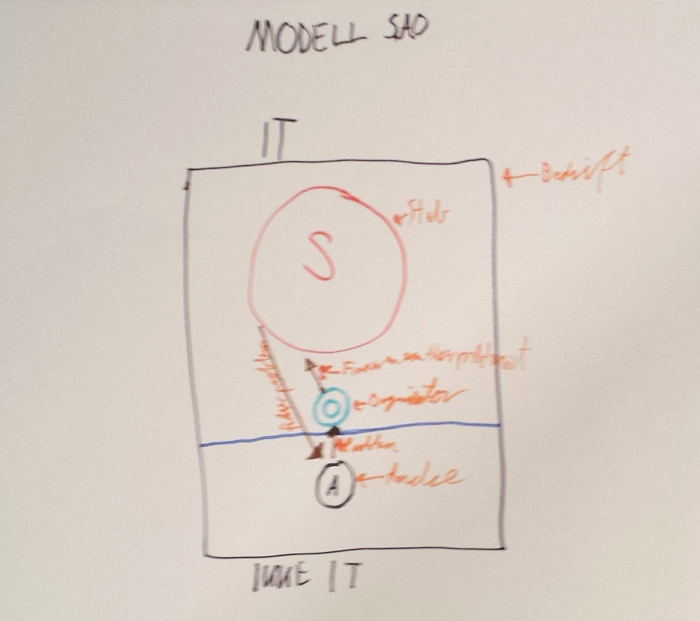
My oldest son, Niklas (14) asked if he and two friends could work at Å (a-circle.no). Obviously I took the opportunity. I got the idea of charging them with the task of creating two generic business models – one for Project Management and one for IT Service Management.
The boys got to work and in less than two hours, they delivered an intriguingly simple model for Project Management. Their “SUKK”-model pinpoints responsibilities in a project far better than the ruling model of PRINCE2.
Their model for IT Service Management was even more succinct and with excellent focus on exact responsibilities. While ITIL is perhaps the best professional model for corroding responsibility in an IT organization, their SAO model goes straight for the kill with no wishy-washy or overlapping responsibilities.
In addition to this, I got them to define the term “delivery” and had them write down exact deliveries for roles such as “a baker”, “a teacher”, “a student”, “a Prime Minister” and “an architect” as well as writing down their own personal deliveries in life. I have done this exercise many times with groups of executives and experts from businesses and government agencies. These boys were amazing and I believe they did a better and more efficient job than any other group I’ve seen.
The NOK 900 generated amazing value as I will use the results from this day in many seminars and talks to come.
The date is set. The venue is booked. Noise will be made.
Yes, the book is in Norwegian (for now).
English translation of the title: “Nineteen eightyfour. My way into Scientology’s inner secrets – and out again.”
If you are in Oslo on the 18th of September, you are welcome to join the party (including OSA – The Church of Scientology’s intelligence and dirty tricks arm).
It deserves its own blog post so as not to drown in the PRINCE2 primer. Here goes:
The company “Å” (Brendan and me) is truly a “cut the crap”-company. We inspire and enthuse people and help them realize their potential. We help people take 100% responsibility and to excel in their communication with others. This is why we try to keep formal structures at a minimum. This is why we see methodologies such as PRINCE2 as a casual toolbox and not as an end-all. And without further ado, here is how we practice project management, regardless of the size of the project. Here’s a short HyperList showing just how we do it:
Project Management, Å-style
START PROJECT
Supplier and the Customer agree on the Project
Measurable Project Product(s)
Resources needed
People with 100% reponibilities are appointed [?] Documents
PROJECT
Project is delivered
Work is assigned, executed and approved [? issues arise] Parties agree on issue handling or to stop the project
CLOSE PROJECT
Benefits Review [?] Project report;CONTAINS:
Project Product(s)
Project Benefits
Lessons Learned
Recommended actions after Project
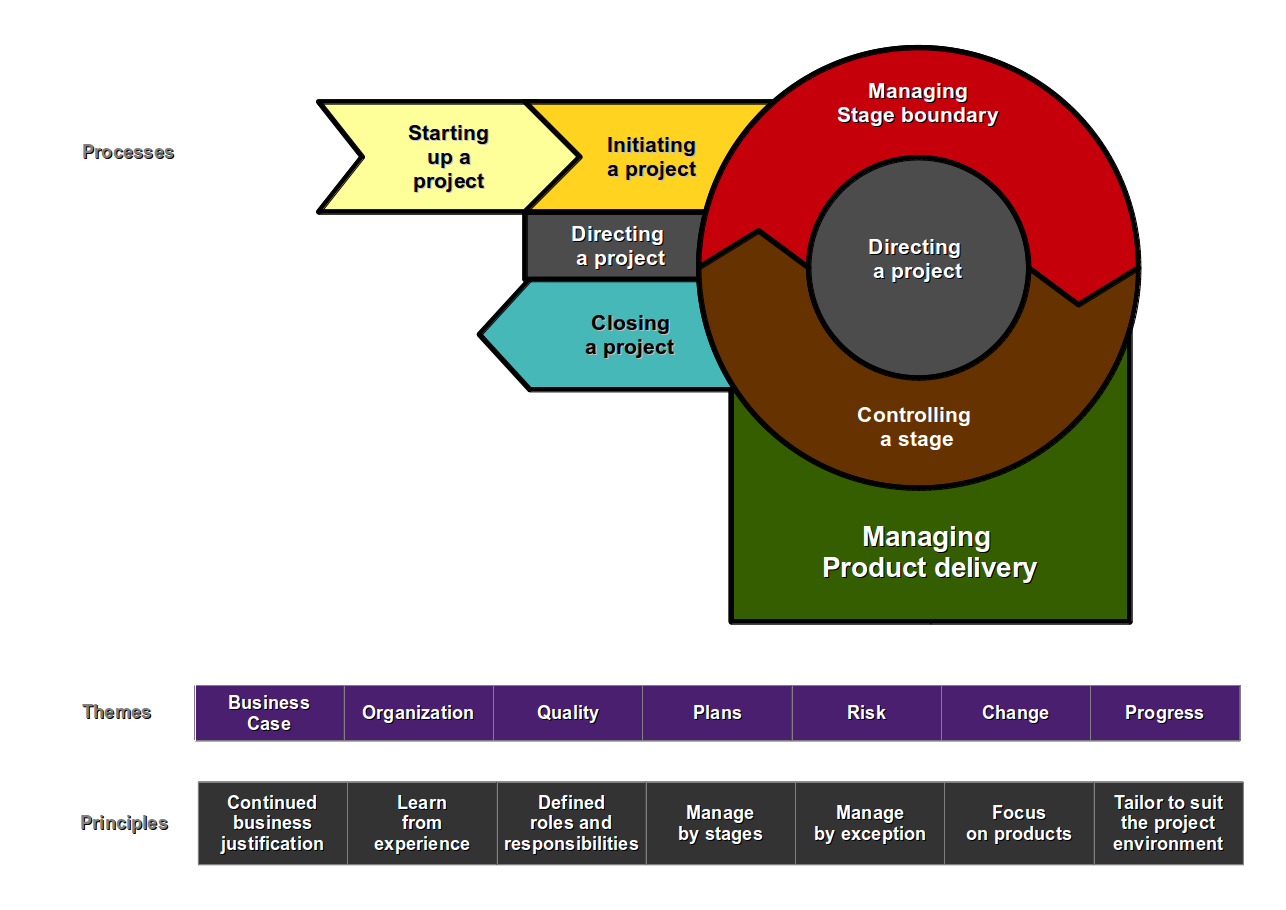
We just completed an article on the project management methodology called PRINCE2 – Projects IN Controlled Environments, version 2. From the article:
The purpose of this article is to provide the shortest possible description of PRINCE2, to compact the methodology and make it easier to understand and implement also in small projects.
PRINCE2 contains three major parts consisting of 7 principles, 7 themes (tools) and 7 processes. A brief explanation of each is provided in this article. At the end of the article, you will also find a much simpler, leaner way of looking at project management.
It is shit, and it is considered holy by the Church of Scientology.
As I touched upon, Ethics is one of three main parts of the subject of Scientology. The other two are Tech (training and counseling) and Admin (organizational policy).
After the last post on this subject, I did a bit more research and came across something that perplexed me. I cannot believe I read this while in the church without a blink.
Ethics comprises the subject of Justice. While Hubbard confused the two subjects in more places than I can count, he somewhere intended ethics to be a person thing. He equated it with reason, with personal discipline and being true to oneself, while justice is the action taken by a group toward a person that goes against the mores of a group.
A person’s transgressions against the group is classified into three categories:
Misdemeanors
Crimes
High crimes/Suppressive acts
There is an extensive list the three categories covered in the book, “Introduction to Scientology Ethics”. Wading through the list, we find a few interesting points:
Misdemeanors:
Noncompliance
Waste of funds
Disrupting a meeting
Impeding justice
So far, so good. These are the minor transgressions committed by the unruly. How about the real, juicy stuff, the crimes? Hold onto your hat, because here’s where it gets weird.
Crimes:
Failure or refusal to acknowledge, relay or execute a direct legal order from an International Board member or an assistant board member
Refusal to uphold discipline
Not using a computer once it is installed
Failing to keep a computer clean and in repair
Misfiling in a computer
Seducing a minor
Issuing any Scientology data under another name
Committing a problem
Holy shit! “Seducing a minor” is on the same level of severity as “Not using a computer once it is installed”!
Note that not toeing the party line is a crime.
And what the hell is “Committing a problem”?
Keep that perplexity – here comes the worst of the worst of crimes:
High crimes/Suppressive acts
Unauthorized use of the materials of Dianetics and Scientology
It is a high crime to publicly depart Scientology
Seeking to resign or leave courses or sessions and refusing to return despite normal efforts
Failure to handle or disavow and disconnect from a person demonstrably guilty of suppressive acts
Using Scientology policy but calling it something else or attributing it to some other source
Withhold of vital information
First degree murder, arson, disintegration of persons or belongings
Excuse me? Withholding vital information from the Church is as bad as first degree murder? And worse than seducing a minor? Please pass me the barf bag.
And right here is the basis for the disconnection policy – failure to disconnect from someone who have publicly departed Scientology makes you just as guilty of a high crime. On par with arson or disintegration of a person.
And the use of Scientology policy while calling it something else is as bad as slaughtering a random person with a chain saw.
And people dare to call this a cult? Go figure.
Oh, and I can hear the justification crew come running down the door telling me this is taken out of context. That I am being too literal, that Hubbard didn’t really mean it that way, or, or, or. I am sure, with enough mental gymnastics, you can make any mental peg fit a square personality. I know, because I was just as guilty of leveling out my cognitive dissonance by the use of mental tricks. I cringe.
I should ease the harshness by mentioning that there are indeed good stuff that Hubbard wrote on the subject of ethics. But this, ladies and gentlemen, is just plain sick.
You can present uptime statistics, production efficiency, delivery times and numbers of this and that as much as you want. At the end of the day, it is the customer’s feelings that determines if he will continue buying your products or services.
Our emotions, our feelings are the sum of the impressions we value. And our emotions direct our actions. It matters little that you complied 100% with the SLA if the customer doesn’t feel like renewing the contract. You may think it’s unfair, that you did everything you could, or that it is irrational on the customer’s part. But the fact remains, if it doesn’t tickle the customer’s fancy, he will vote with his feet.
This is precisely why it is so important to talk about feelings. Invite the customer to open up. Make it safe to talk about that elusive airy-fairy stuff that women have been babbling on about for eons. Just as you tell the customer straight what you think, just like you open up fully about your emotions, so should you help the customer open up to you. Get underneath each other’s skin. Only then will you be able to figure out what’s really going on.
But a customer’s feelings toward you are usually not conglomerated only from his experience with you. He may have had a bad day, a quarrel with his wife or an excellent weekend trip camping with his daughter. They are elusive, these feelings. But to figure out what you can do about his experience with you, you need to get him to talk about it. Only then can you better sift out what emotions he may have specifically toward you.
Management frameworks tend to disregard emotions. Frameworks such as ITIL or PRINCE2 treat them as irrelevant and tries to supplant them with SLAs and the like. Other frameworks, such as Hubbard’s Management Technology treat them as contemptuous… HE&R (Human Emotions and Reactions) is an example of inventing a term to belittle another’s feelings.
All this goes for other relationships as well. The more important the relationship, the more important it is to talk about feelings. If you value the other person, value his or her feelings.
I hold that your feelings are your most important markers in life. It is the zest of living and should be treated with utmost respect. It is what we live for, the reason to enjoy the games we love to play, even the game of life itself.
When we (the company “Å”) helps organizations and individuals do better, we are faced with the task of making sure our client understand what a “delivery” is.
Most people have a rather anemic understanding of exactly what they are supposed to produce in their job. They most often define their job by what they do rather than what they are supposed to create of value.
Being a Norwegian company, we approach the problem by using a well known example. Our board member, Mr. Santa Clause has helped us understand what a delivery truly is. Every year he gets some input (wishing lists), he does some magic (nobody cares how he does it) and when X-Mas comes, he delivers presents to all the nice kids in the world. Mr. Clause has a clear-cut understanding of why he is on the job.
When we help people grasp the real reason behind the job they do, we start with this definition:
A delivery is the result of one or more actions. It is the outcome, the product, the value created. It is the reason for doing the action(s).
You can find the answer to what the deliveries of your job are by asking questions along this line:
What do I deliver to my customers?
Why do I get a salary?
What would not be produced if I wasn’t doing this job?
What are the valuable results from what I do in my job?
If I should measure the output from my job, what exactly would I measure?
It is better to have a clear view of the deliveries intended and do the actions necessary to produce those deliveries, than to do a set of actions and hope for some valuable outcomes.












 Geir Isene - uncut