Mastery

Put simply:

Transcript:

We don’t care about money.
All I want to do is make bet­ter sushi.
I do the same thing over and over, improving bit by bit.
There is always a year­ning to achieve more.
I’ll con­ti­nue to climb, trying to reach the top, but no one knows where the top is.
Even at my age, after deca­des of work, I don’t think I’ve achie­ved perfection.
But I feel ecs­ta­tic all day… I love making sushi.
That’s the spi­rit of the sho­ku­nin.
When to quit? The job you’ve wor­ked so hard for?
I’ve never once hated this job.
I fell in love with my work and gave my life to it.
Even though I’m 85 years old, I don’t feel like retiring.
That’s how I feel.

Thanks to Hugh for the tip.

Feel free to ask

q

When the traffic gets high, when posts get more than 500 or even a 1000 comments, I am bound to miss questions from my readers.

I want to answer your questions, and to ensure you are not left without an answer, I propose you ask any questions you may have to me as comments to this blog post.

Just add your question as a comment here and I will get back to you with an answer. Ask anything – from my views on life, IT, Scientology, my favorite HP calculator, music, art, preferences in any part of life or whatever else you may have on your mind. Do not hold back. I am not shy.

This post is not an arena for long discussions – or I may again miss some questions buried in long threads. Interesting topics may instead earn separate blog posts.

Scientology – does it work?

I stepped back, took a couple of breaths and then a good hard look… at the thousands of discussions on Scientology I have witnessed during the last three decades. Some in person, most online. I have come to the conclusion that discussing the content of Scientology, the processes, the policies, the cosmology, Hubbard’s life and possible intentions, Xenu, the rationale behind Dianetics, the E-meter and the rest of it is pretty useless. It is only really worthwhile to look at the actual results produced. The results is the key – the only aspect really worthy of discussion.

So, it really only boils down to: “Does it work?

Does it work for you? Does it work for Average Joe? Does it work for the society? What are the actual results produced by the church? What are the actual results produced by the individuals and groups applying it? Is it beneficial? And does it produce the advertised results? What in Scientology works? What does not?

I believe there are different answers to each of these questions. I will list some of my conclusions here:

  1. Did Scientology work for me?
    Yes. Everything I did in the church gave me valuable results. The service I did outside of the church (L 11) was fantastic.
  2. Did Scientology work for my friends?
    About 50%. Some of my friends had excellent gains from their auditing and training, others had little, no or even negative results. Some crashed. In this category I have little experience with friends doing Scientology in the independent field.
  3. Does it work for Average Joe?
    Well… something like 95% of the people that get into Scientology bounce off like a tennis ball off a wall.
  4. Does Scientology benefit society?
    Insignificant. It’s irrelevant to the world at large – from its inception to present time.
  5. Does auditing work?
    To a large extent: Yes. Almost all the people I know that have gotten Scientology counseling inside or outside of the church are very happy with the gains they have gotten. They do however tend to worry more about their own issues after having started getting Scientology auditing – they tend to introspect more.
  6. Does Scientology training work?
    Usually. The training is lacking the component of an instructor that help bring the material to life. Thus, the training tends to be more “dry” than other comparable training in society.
  7. Does Hubbard’s administrative technology work?
    No. It’s a disaster. This is the single most dominant factor why people shun Scientology and why people leave it in droves – despite the gains that can be had through auditing and training. In this body of knowledge you find horrendous policies on how to handle enemies, policies on disconnection, volumes of details resulting in over-bureacuracy, micromanagement and stripping of employees creativity, etc. It’s perfect for creating and managing an organization of robots. I suspect that a group delivering Scientology auditing and training without the Admin Tech as a yoke would do quite well and get a large percentage of happy clients.
  8. Does Scientology produce the advertised results?
    As a whole: No. There are no OTs produced as advertised by Hubbard. Neither are there any Clears by the original definition in Diantecs. But certain training courses and auditing levels does produce the advertised results most of the time.

These are my current conclusions, subject to future revisions.

Update: With more than 1500 comments on this blog post – I hope to carry the discussions over to a new blog post, titled “Scientology – does it work? (cont.)“.

Tools

A tool is any aid to accomplish a task. From a hammer, drill, robot or car to a process, method, equation or your own mind. A plan, a preconceived idea or an expectation are also tools. As long as a toll remains under your control, you’re fine. But when the tools start running you, responsibility and control suffers. Let’s kick this off with the dictionary definition of “tool”:

tools

TOOL (Mirram Webster)

1 a : a handheld device that aids in accomplishing a task
b (1) : the cutting or shaping part in a machine or machine tool (2) : a machine for shaping metal : machine tool

2 a : something (as an instrument or apparatus) used in performing an operation or necessary in the practice of a vocation or profession [a scholar's books are his tools]
b : an element of a computer program (as a graphics application) that activates and controls a particular function [a drawing tool]
c : a means to an end [a book's cover can be a marketing tool]
d often vulgar : penis

3 : one that is used or manipulated by another

4 plural : natural ability [has all the tools to be a great pitcher]

Origin of TOOL: Middle English, from Old English "tōl"; akin to Old English "tawian" to prepare for use — more at "taw". First Known Use: before 12th century

Let’s focus on definitions 2a and 2c here.

I could go on and on explaining the usefulness or necessity of tools, the joy of my tools (HyperList, my HP calculators, my PC, my mind and my penis), or the troubles that ensue when your tools starts taking over. I could explain how troubles in life most often come about when your mind starts running the show, rather than you remaining in control (the essence of irrational behavior). I could point to the article “Processes, Automation and Human Potential“, and show that automation must remain under someone’s responsibility, lest it will bereft the user of will. Etc.

But for the sake of succinctness, I will leave you with a scale of “free will“:

  1. No Tools
  2. No tools needed
  3. Tools used freely
  4. Tools used compulsively
  5. Tools needed
  6. Automation
  7. Only tools

When you are in prison, you are at level 5 or 6 – the effect of tools (the prison system). When you are scared shitless of a spider on the floor, you are likewise at level 5 or 6 as your mind has taken over the control. When you use a calculator to figure out an answer, you are on level 2, 3, 4 or 5 depending on whether you could have gotten the answer without the calculator. When you use a slide show in a presentation… levels 2-5, unless you have no choice at all – as when your boss has ordered you to run those exact slides (then you would perhaps serve at level 6). When a process or method or ideology becomes more important than the result it aims to achieve, you operate at a level below 3.

In different areas of life and at different times, we are operating at different levels on this scale. Our need for tools depends on our inherent abilities, our confidence and our love of the tools we use.

Of course, tools are part of any game. To master a game, you must master the tools, and that implies being able to use the tools freely, if at all. When you are struggling in a game, you are struggling with the tools, you are unable to use them freely. And that includes your mind.

Personally, I am on a quest to nudge myself towards the top of the scale on most any area of life (except for my HP calculators). It seems to me that freedom is gained through regaining the ability to freely use the tools in a game, and by the subsequent shedding of the tools involved.

I get the ball, I pass the ball.

Perhaps the best midfielder in the world, Xavi, explains how he and Barcelona is so successful in the game of soccer: “I get the ball, I pass the ball. I get the ball, I pass the ball”.

I use his quote to make business people understand what 100% responsibility, simplicity and immediate relevance is all about. It is a simple enough statement, but it is only immediately relevant in business when you understand the meaning of the two operative words “get” and “pass”. Xavi didn’t say “I happen to get the ball, I get rid of the ball. The ball got to me, I kick it somewhere.”

Let’s take a look at the definitions of those words. From Mirriam Webster’s:

Get: To gain possession of, to seek out and obtain.

To “get” the ball means to seek out and obtain and gain possession of the ball. It is a causative action – the player takes 100% responsibility for the input – getting the ball under his control.

And for the sports definition of “pass”, we turn to Wiktionary:

Pass: The act of moving the ball or puck from one player to another.

To “pass” the ball is to take 100% responsibility for the output – that the ball passes from one’s own control to that of a teammate.

This is the essence of the article titled “Processes, automation and human potential“. It is a simple concept and very visible when it fails or succeeds in soccer. But oh so difficult to get people to understand and practice in the business world.

One doesn’t just sit around and wait for the input, one obtains the input needed to produce value in one’s job. One takes 100% responsibility for getting what one needs in order to deliver what is expected. And 100% responsibility means no blame, shame or regret – only that one gets the needed input.

And one doesn’t just pass off any package out of one’s area of responsibility. One ensures the customer really gets the value expected, or better. The customer is the recipient of the value one creates. whether internal or external to the company.

This is all about 100% responsibility. And it is simple – that’s why it works so well. And it is immediately relevant. Even in the family, among friends or in business.

Xavi really gets it, and he’s the best.

5000 reads on Scribd

I swung by Scribd.com and found that my articles now have a total of more than 5000 reads. That would account for around half the number of total reads of those articles (the rest being read on isene.com and elsewhere). If you haven’t yet looked at the articles, now is the time to nudge you to swing by the same place 😉

Writing articles: Collaboration

Writing articles in collaboration with great people

What culture does it foster?

ITIL is lacking in people-focus. PRINCE2 is lacking in creativity, LEAN is missing out on innovation, and Scientology management philosophy (LRH admin tech) is lacking in compassion.

Objection! ITIL talks about people, and that people are a core asset to any organization. PRINCE2 certainly inspires creative projects to be more successful. LEAN is stressing innovation through continual improvement. And L. Ron Hubbard covers the concept of affinity and also compassion in several places like the policy on “the model hat of an executive”.

All true. But a grape in an apple pie does not make it grape pie. And a mention of love does not make Anders Behring Breivik a loving person.

Because it is not what a subject happens to cover. It is what it predominantly covers. One has to look at the whole picture and see what the major portions are dealing with. The major parts of a subject marginalizes the parts that happens to be included. The intentions behind a subject is made evident by the major focuses of that subject. And that is the culture it fosters.

Scientology management philosophy fosters robotic and militant obedience to policy. LEAN fosters blinders and a squeezed organization, PRINCE2 fosters bureaucracy and ITIL fosters red tape through process compliance. None of them makes for an inspiring, creative and people-focused organization. Because even though these concepts are mentioned, they are dwarfed by the major parts that focus on hard and cold values of yestercentury.

It seems that most organizational frameworks are created as a substitute for more directly handling the problems of responsibility and communication between people.

This is not say that all such frameworks are useless. They may very well contain useful tools. But organizational frameworks will always be inferior to human attention, a warm heart and a hug.

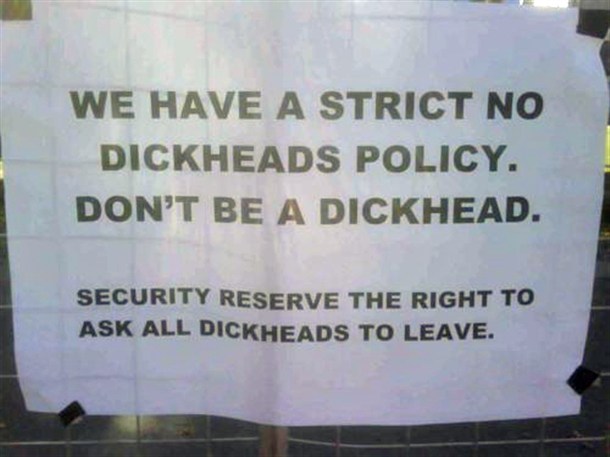
In the spirit of strict policy:

In the spirit of strict policy

An epiphany of sorts on help

I have had an interesting discovery about myself recently; Despite the fact that I have received countless hours of help in the form of Scientology counseling since 1984, I have grown increasingly hesitant to receive help from others proportional to how much I have been helping other people in my life.

The more help I give and the more I listen to others with issues at hand and the more I give advice, the less easy it becomes to accept others helping me. It’s like my mission in life has become so focused on helping others that it feels awkward to have that flow reversed.

The support I offer is mostly very practical and very direct – both in business and for interesting individuals. It ranges from coaching individuals to success, coaching teams to perform at their best and organizations to break important barriers. I am very lucky to be able to do this together with Brendan in our new company. But as my focus on helping others sharpens, my acceptance for others helping me seems to dull. This is something I have to work on – to be as open to others supporting me as I am eager to support others.

I don’t have any specific reason for sharing this, and I’m not particularly trying to rally any discussion. But it does feel nice to be able to let others in on my inner thoughts.