What to take responsibility for

When I coach people, the main positive step occurs when the person stops feeling responsible for what other people think or feel and starts taking responsibility for what he or she thinks and feels.

Taking full responsibility for one’s own thinking, feelings and actions is liberating. Further freedom comes from stopping the worrying about what others might think.

One creates one’s own thoughts and feelings. What one thinks and feels is a choice. Always – even when it doesn’t seem like it. To conquer one’s own thoughts and emotions is hard. But it is a worthwhile quest.

When I read this post to Anette, she asked if I should include some practical examples where this viewpoint would be benificial. Then she added, “…or maybe you should ask your readers for good examples?” And so I do.

thinking

HyperList version 2.3. Hashtags, graphing and more

I am proud to present the latest HyperList release – version 2.3.

HyperList now accommodates Twitter-type hashtags (called simply “tags” in HyperList – prompting a renaming of the old type of HyperList tags to “properties”). References are changed and so is Change Markup. And then there are a few minor fixes.

The VIM HyperList plugin is updated and released over at vim.org.

Apart from these enhancements (and more), there’s a real treat in the mix: Hypergraph.

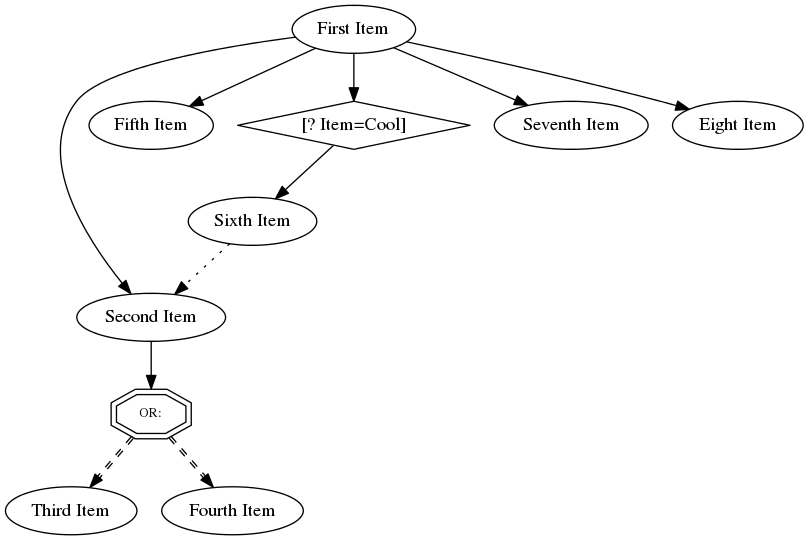
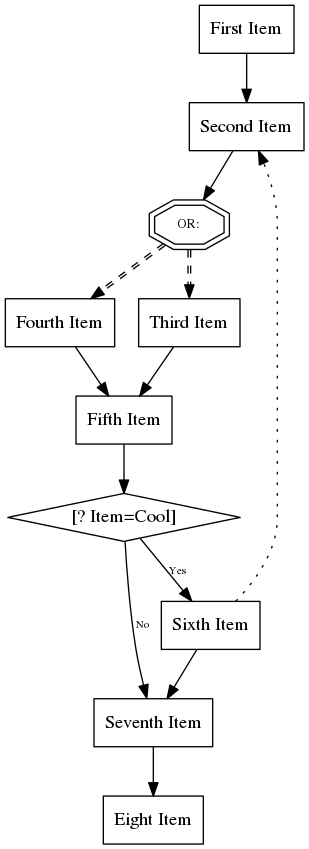
You can now automatically graph a HyperList as either a mindmap (for HyperLists that are State descriptions) or a flowchart (for HyperLists that are Transitions descriptions). An example should suffice – this dummy HyperList:


First Item
    Second Item; OR:
        Third Item
        Fourth Item
    Fifth Item
    [? Item=Cool] Sixth Item (<Second Item>)
    Seventh Item
    Eighth Item

Graphed as a State (mindmap):
test_state

Graphed as a Transition (flowchart):
test_trans

HyperGraph is a rather complex endeavour. It works but you may encounter some snags. If you do, drop me a line and I will fix.

Visit the HyperList page to download the HyperList document and the new HyperGraph script.

Hidden risk of outsourcing IT

There is a potentially undersold risk as a company considers outsourcing IT development or operations: The loss of internal productivity to mentor outsourcing consultants are often difficult to recuperate.

When we learn complex systems, our competence usually follows a Sigmoid curve (also known as “S-curve” or “Logistic curve”).

“Many natural processes, such as those of complex system learning curves, exhibit a progression from small beginnings that accelerates and approaches a climax over time.” (1)

sigmoid_curve

“In this case the improvement of proficiency starts slowly, then increases rapidly, and finally levels off.” (2)

When a company is looking to outsource the development or operations of proprietary complex IT systems, the consultants will usually follow this learning curve. But in order to eventually become productive, the consultant will rely on mentors to learn the ropes.

An internal competent developer or system administrator is assigned as a mentor to the external consultant. The mentor will experience a drop in productivity, and regain the productivity concurrent with the consultant.

Spreading the burden among several mentors may make the productivity loss less visible, but the combined loss of the mentors may even be greater.

According to a recent survey I did, the productivity loss of the mentor was at least 50%. The time needed from scratch to a fully productive developer was 24 months. The question is “How long would it take for the productivity of the consulatant to make up for the productivity loss of the mentor?”. Or in other words “How long until this scenario goes break-even?”.

To calculate this, we turn to the Sigmoid function:

sigmoid_function

Productivity of the consultant (p) is the Sigmoid function over time (t). We adopt the function to go from 0 to the time needed to become fully productive (T).

consultant

Then we adopt the function for the mentor’s productivity (P) starting from his dropped productivity and back to full productivity after T time. The drop (D) is the fraction of his full productivity (1).

mentor

The reason for the slight difference in the equations (the factors “7” and “8”) represents the fact that even after the time “T”, the consultant would on average still be a notch lower in productivity than the mentor.

The two curves combined with “T = 24” and “D = 0.5”:

comparison_curves

The accumulated productivity of the consultant over time is the area under the blue curve, i.e. the integral of p(t).

consultant_integral

To get the accumulated loss of productivity of the mentor over time, P(t), we first invert the mentor’s productivity to get his productivity loss, Q(t).
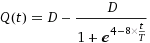
mentor_inv

And the integral of Q(t).

mentor_inv_integral
The big question is “At what time (t) does the consultant’s productivity make up for the mentor’s lost productivity?”

comparison

With:

integral_indef

… we get:

comparison_integral

…which reduces to:

comparison_integral_red

Graphically represented:

comparison_integral_graph

The question is so big that WolframAlpha cannot display the numeric result within its standard computational time. But with the help of my trusted old HP-41 calculator, the answer was achieved: It takes 19 months of mentoring for the outsourcing project to break even.

The hidden risk is that if the consultant quits before that time, the outsourcing is a losing proposition.

So, if a company considers outsourcing IT to let’s say a Baltic company, one must be very certain that the turn-over of their consultants is above this break-even by a good margin.

The risk management: First figure out how long it usually takes a new employee in the company to get up to full production speed. Add some time if the consultant speaks a different language, is of a different culture and especially if the mentoring is done from a distance. This will be your “T” time.

Then, by a few short pilots, figure out the mentor’s productivity loss. This will be your drop “D”. Along with WolframAlpha and an HP-41, this is all you need to calculate the break-even for the outsourcing project. With the use of some employment statistics from the outsourcing company or the IT industry of that country, you will have a pretty clear picture of the risk involved.

One can, to some degree, mitigate this risk through effective Knowledge Management. A competent Knowledge Manager with an excellent company wiki solution and efficient training setups could shorten the time to break-even by perhaps 20%. Nevertheless, it’s a serious risk to consider – especially since tacit knowledge from years of experience in the company is hard to transfer. Add to this the risk of the mentor quitting or is put on other tasks. Thus the consultant’s stay should exceed “T” with a good margin.

Update (2015-01-18)

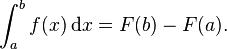
An approximation formula will suffice for quick gain/loss calculations. This formula gives the net gain (if positive) or loss (if negative) for any given time (“t”):


gain_loss_simplified

Teenage Mutant Ninja Turtles, waffles and growing up

Dad, can I get 298 kroner to buy the new Teenage Mutant Ninja Turtles toy?

No, you can’t. Maybe you have another solution?

Hmmm… OK

Without hesitation, Niklas turned around went over to his grandmother and struck a deal. My mother got busy making waffles and lemonade, and together they carried a plastic table down the stairs and put it up right at the intersection off the property. While she hid behind a tree, the 3½ year old boy wasted no time. He stopped every car and offered waffles with jam and freshly made lemonade. In just a short time he was sold out and counted 400 NOK in earnings. He went over to his grandmother and paid her a 100 for the job, ran up the stairs and asked me, “Dad, can you drive to the store for 2 kroner?” “I sure will” Niklas got his dream toy and a great experience along the way.

This week, we’re in New York together, and after the third day we decided to go to see the new Teenage Mutant Ninja Turtles movie. The story unfolds in New York and we could see many places we had just visited. And Niklas got to reflect on his first day as a business man almost 12 years ago.

Niklas_Geir

So what?

After a long discussion on the blog post titeled “Your Life“, one of the contributors (katageek) came up with a much better angle than “Fuck It” or even “letting go”:

I suggest “So What?” over “Fuck it!” When it comes to kids. For two reasons:

1. “So what?” can trump any “That’s What.”

and …

2. It’s not bastardizing sex, the coolest thing in life!

EXAMPLE FROM HISTORY:

GENGHIS KHAN: “I’ve conquered your people and slaughtered them.

TRIBAL LEADER: “Yeah, so what?”

GENGHIS KHAN: “SO WHAT? SO … WHAT? … I’ve conquered your people and killed them all but the finest women. Here is your wife. Watch as I, Genghis Khan rape and impregnate her at the height of her fertility as you watch. And then I will kill you in front of her THAT’S WHAT!”

TRIBAL LEADER: “Yeah, so WHAT? It’s been done before. Nothing new here.”

*****

CONCLUSION: There is no “That’s what” that cannot be trumped by a “So what?” And by saying “Fuck it” to Genghis Khan, you are submitting to him cuz “fuck it” was what he was going to do.

Remember, 1 in every 200 people is descended from Genghis Khan.

But … So what?

I’d say this is a better angle for everyone, not just for kids.

The ingenious angle here is that “So what?” is a question. It encompasses both “fuck it” and “letting go” and directs the person to what comes next. It inspires the person to letting go and to look for solutions in a subtle way.

Now this provides an excellent example as to why I blog. You guys help shape my views. Melike.

A very different interview

I haven’t read your application. Or your CV. In fact, I know nothing about you except your name. Right now you are a blank sheet of paper. Let’s start the interview“.

Katarina looked befuddled. This wasn’t exactly the start she expected. As I got back from the counter with something to drink for us both, the surprise on her face had worn off. She was ready.

I made her focus on the actual results she had achieved in her professional and personal life. I looked for relevant accomplishments. Real value generation. Measurable return. Where she had made a real difference.

And she responded like I have rarely seen. A string of great accomplishments. Amazing results. This girl could really deliver.

Out of the 6000+ interviews I have done, this was by far the best. No tools in the way, no school grades ramping up any preconceptions, no personality test scores, no spell-checked application or CV based on “marked standards”. Just Katarina.

04f49e8

Your life

What if you at your core is “potential will”? And as you start to exercise that potential, you create. You create and add to the game of life. Each creation is an expenditure of your potential – of your will. You trade potential will for actual experience. The more you cumulatively affect, the more affects you. And what if you actually create every experience you have at every instance? Not that you necessarily create everything that is – but every effect it has on you.

It’s like a game of soccer. You stand outside the field watching other players. You decide to pitch in. At the instance you join the game, you are subject to a set of rules. The only way to not be affected by the rules is to leave the game. But as long as you decide to play, your will is limited by the rules. And the more agreements you enter into – such as formations and your position in the team, the less free will you have left.

Like in business. You start off with two bare hands and a brilliant idea. You have a whole vista of opportunities. As you create the company, you add substance, but at the same time you relinquish your range of possible choices. You trade free will for focus, for creations. And the more you create, the more you own. But what you own also owns you. It takes a hold of your freedom.

You expand your company, adding people, products, processes and partners. Company rules, regulations and bureaucracy. And limitations to your free will. When Facebook was a startup… when HP or Apple was garage companies, the founders had lots of ideas and much free will. But as the companies expanded, their freedom within that game diminished. To regain freedom, they could pack up and do something else.

What if this is how it is on all levels in life?

What if you create every thought and every emotion you experience? Every high, every nightmare. What if all you had to do to not have the nightmare was to “wake up” – to stop creating those thoughts, those fears?

Maybe the idea of others being responsible for your thoughts, emotions or actions is limiting your own free will? Maybe your assigning your responsibilities to others is you “digging your own grave”. Perhaps this is why “letting go” works so well. Simply saying “fuck it” to the blame, shame and regret – and just not creating those haunting thoughts, those painful emotions anymore.

Adding structure limits freedom, adding policies limits choices and adding complexities limits potential.

These musing could funnel four valid therapies to regain one’s freedom in any area:

  1. Just “letting go” and say “fuck it” to the limitations you yourself create
  2. Spotting the fact that you create those thoughts, those emotions in order to be able to “let go”
  3. Exercising “liking” a situation or at least your own created feelings regarding a negative situation
  4. “Exposure training” where you force yourself to do the opposite of creating the limitations

The last point would encompass the exposure to spiders for the person suffering from arachnophobia or skydiving if you are afraid of heights. Research show that 2-4 exposures to your fears per week will “wear it out”. You would expose your fear on a gradient – to challenge the unpleasant feeling of fear increasingly until it subsides. It is important to not overdo it or make the challenge insurmountable. It’s like lifting weights to build your bodily strength.

My experience in coaching hundreds of people in life is that these therapies tend to work better than regression or “looking inward into your mind”.

It boils down to “doing what helps” and “not doing that which doesn’t help” in any given situation. Creating feelings of “stress” or “panic” or “rage” may not be very helpful in a certain situation. If you looked at the situation calmly you may come to the conclusion that there are other, more helpful feelings that you could have created instead.

Living in the present, not delving into the past or living in the future, that is a key to happiness. But if you realize that you are able to create any thought and any emotion, you really don’t need any means or any excuses to be happy. Just create happiness. It takes training to do so when life is inviting you to create other emotions. It may be hard to create a happy you when you are stuck in the dentist’s chair. But instead of giving away your key to your thoughts, emotions – your life… training and exercise will eventually get you there – taking control of your own thoughts, emotions – your life.

More on Antifragile and some on Scientology

I shared a video on Facebook yesterday that stired more than 50 comments in a very short time.

I posted this: “And we cling to our orderly rules and safe precautions. Who said we need traffic lights and stop signs.

The video is pertinent to the book I’m reading, “Antifragile”. Let me know what you think.

On another note – Scientology: I have written many times that I believe anything can help a person – anything the person believes can help him. It is a matter of coercing the person into trusting a method or scheme or person or thing and he will admit that it helps him. And thus it does. The person is actually coerced into believing in his own powers to change his life on a via. It seems easier to coerce the person into trusting some via – some other, outer thing – than directly trusting his own abilities. Trusting his own requires more of that very scarce commodity called responsibility.

Now to my point: Scientology is a product of its times. Just as Hubbard was a man of his. The 50’s, 60’s and the 70’s. It is a new age religion that focus on the dangers of the cold war era, the imminent dangers of atomic war, the energy crisis, the us versus them of the US versus the Communists. The focus on Taylorism, whipping people into production, the worshiping of systems, of machine organizations, efficiency at any cost. All in the name of saving the world because the world is in such a dire need.

But not anymore. Scientology posed solutions to a different era. It is much harder to sell 40-year old solutions in today’s society. Especially when they are sold as fixed, permanent and timeless solutions to any problem imaginable. Thus it becomes harder by the year to coerce a person into unleashing his inner powers via Scientology. Other, more modern coercions is emerging and more will come.