Been busy lately. With moving into our new home, with interesting new projects, with coaching some amazing people. And so it has been quiet here on the blog. But I’ve got a new idea – what about writing a short blog post every day? Unfiltered thoughts, relating my everyday experiences or whatever pops to my mind. I will try it and see what happens.
The view from our new place – great for my telescope 🙂
Brendan suggested I read the book “Antifragile“. A life-changer. What’s the opposite of “fragile”? Most people replies “robust” or some synonym. But no, that’s not the opposite of “fragile”. If you think of a scale from -1 (fragile) to +1, the “robust would be zero. On the minus side of the scale we find the stuff that is harmed by shock or sudden change – like a fragile vase accelerating toward the floor. Stuff that are not harmed are in the middel of the scale, while stuff that benefit from shock or sudden change is on the plus side. While the story of Hercules beheading Hydra only to see two heads replace the former head neatly illustrated the plus side, there are more common-day examples. Like your body. Exercising your body breaks down muscle fibre resulting in a better body. Stuff that adapts, adopts, learn from getting hurt are “antifragile”. And that is far above something “robust”. And people can be fragile. Or robust. Or antifragile. I aim for the latter and have been for a few years.
It actually got me thinking about how I could benefit from the ultimate harm. Got me thinking about death. And I find myself not fearing death. Rather, I am intrigued by it. I really wonder what it will bring. I’m almost excited about that change, whenever it will come. A friend of mine, Egil Möller once said that he believed the purpose of life was to come to peace with death. Interesting.
Apart from my recent personal philosophical explorations, I have been doing some interesting projects in Å. Currently, I am involved in a few projects at Bærum Kommune (one of Norway’s major municipalities) where I am facilitating a cultural change toward 100% responsibility and focus on Deliverables rather than Tasks (ref. my article “Processes, Automation and Human Potential“). I have also been writing their IT strategy for the next 6 years and proposing a steering and financial model. I also concluded a three month project with Altinn (Norway’s governmental digital data hub) last week. Apparently I moved some people in that organization – one person started crying as he stood up during the dinner to thank me for the project. He’s a great guy and I think he finally understood what a great guy he is.
On the coaching side, I have been working with a dozen people simultaneously for a few months with several concluding during the past weeks. One guy, a 16-year old was suicidal when we first met half a year ago. We established a scale from -3 to +3, reporting every day how the day was. A score of -3 would be “I want to kill myself”, a -2 would be a really bad day, -1 a shitty day, zero would be a “who cares”-day, a +1 equals a good day, a +2 a really good day and a +3 would be a spectacular day. We quickly got up from -3/-2 to an average of -0.5. Now he is regularly reporting +2 and very seldom as low as zero. So, it can be done.
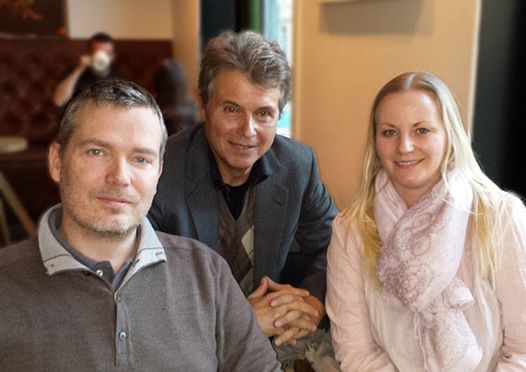
Also, Anette and I met with Dan Koon yesterday. That was fun. Dan is an amazing person. I am hoping to do some fun stuff with him in the near future.
I will probably write shorter posts than this on a daily basis. While on vacation during the next few days, I will write short posts from my mobile phone. Wonder how that will turn out. Up into the mountain we go – stay tuned for pictures 🙂
The Youtube channel “Computerphile” has some cool videos. This one explains very well what Reverse Polish Notation (RPN) is and how it works. The concept is central to the traditional HP calculators, something dear to my heart 🙂
Notice how I am drifting away from blogging about Scientology. Scientology blog posts generate a hell of a lot more action than any post on RPN of HP calculators. But it’s the logical evolutions as Scientology drifts away into the sunset. The church is dying and anything of value in the subject itself will find its way into the common pool og human knowledge. And all will be fine.
In the mid 90s, I decided to drop slides in my presentations. With few exceptions I have managed to stay away from that crutch while inspiring small or large crowds. In 2000, I was asked by IBM to hold a presentation to 35 important customers. And they demanded slides. I gave them one. It was a white slide with big, black letters, “This is a boring slide, look at the man who’s talking”.
The particle physics magazine, Symmetry reports that six months ago, organizers of a biweekly forum on Large Hadron Collider physics at Fermilab banned PowerPoint presentations in favor of old-fashioned, chalkboard-style talks. Quoting the article:
Without slides, the participants go further off-script, with more interaction and curiosity,” says Andrew Askew, an assistant professor of physics at Florida State University and a co-organizer of the forum. “We wanted to draw out the importance of the audience.”
In one recent meeting, physics professor John Paul Chou of Rutgers University presented to a full room holding a single page of handwritten notes and a marker. The talk became more dialogue than monologue as members of the audience, freed from their usual need to follow a series of information-stuffed slides flying by at top speed, managed to interrupt with questions and comments.
“We all feel inundated by PowerPoint,” Askew says. “With only a whiteboard, you have your ideas and a pen in your hand.
Yup. Less constraints, more freedom. The opposite can turn really ugly.
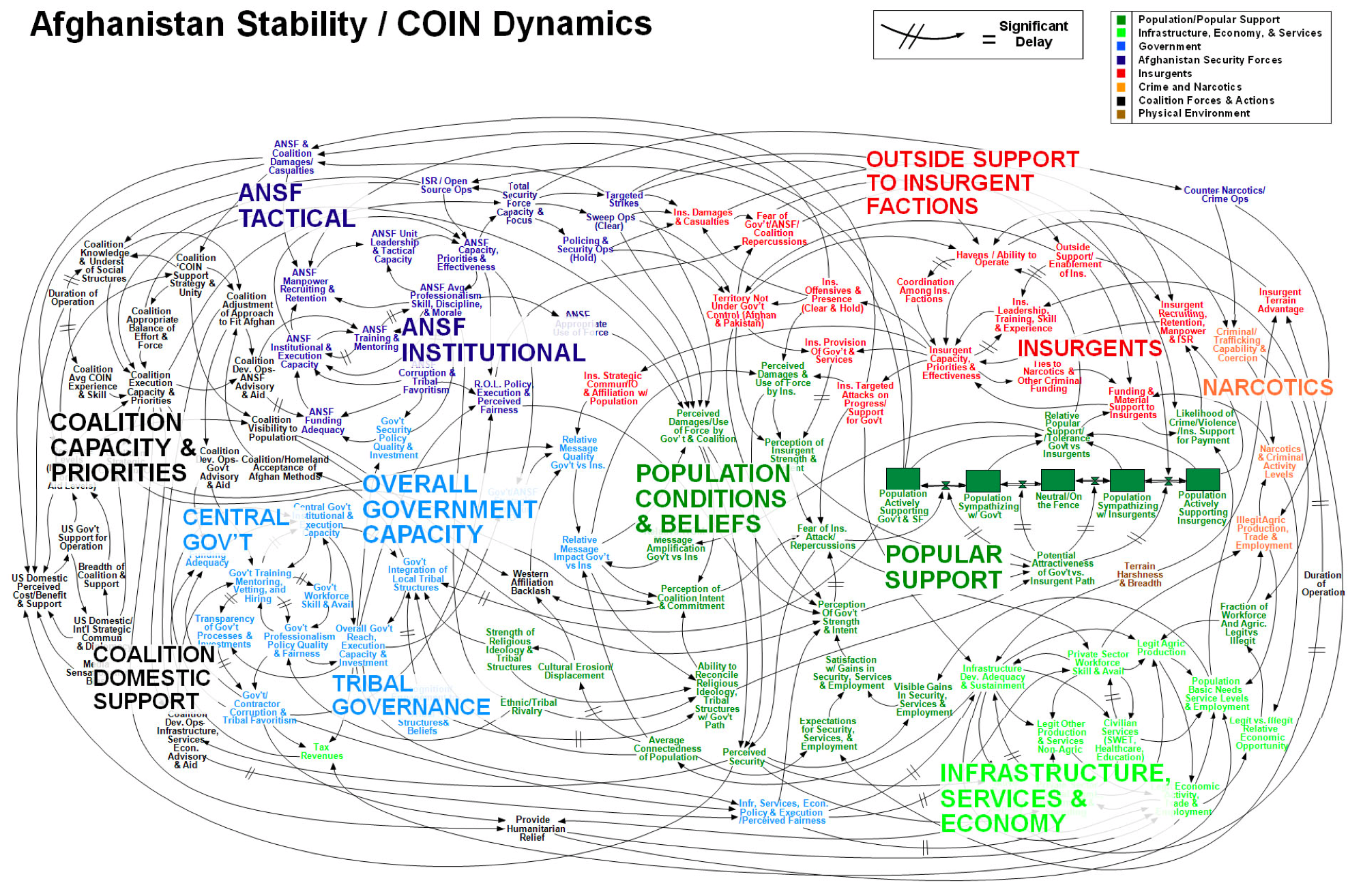
In 2010, when General McChrystal, the leader of American and NATO forces in Afghanistan, was shown the above slide, he dryly remarked “When we understand that slide, we’ll have won the war.”
It’s not because she aced it in the Olympics with one gold and two bronze medals and came from nowhere to be one of only three Norwegians who got three medals in Sochi. It is because of the qualities behind that, and the qualities that aren’t even reflected in her performance as a top athlete.
I knew she was capable of getting an Olympic medal. Last summer, during one of our coaching sessions, I started out “When you get a medal in the Olympics…”, she interrupted “Eh… my ambition is to get into the top 10”. I continued “When you get a medal in the Olympics…”, preparing her for what to come. To me she was obviously amazing.
Tiril Echoff is mentally much stronger than even Tiril herself thinks. But above all, she is smart. Not just intelligent, but acutely aware, able to adopt simple ideas to concrete results. Adding that she is studying engineering at the Norwegian Institute of Technology – although taking a break from her studies to bring a few trophies back home.
I asked her the simple question that so many top athletes struggle to answer, “What makes you so damn good at what you do?”. “I am smart”, she answered. She wasn’t in any way haughty or arrogant, just very honest. And she continued, “I am not the one to train the most, but I train smart – listening to my body, relaxing when I need to and doing my utmost when I can”. And she is honest about what helps her in life. Going through some rough spots has made her smarter and able to appreciate her top results even more. Tiril is very quick to learn – both from her mistakes and from her successes.
“I spent hours meticulously drawing an old castle, three levels of floor plans and carefully populating every room with Orcs, Trolls, Undeads and treasure. But even more hours was invested in planning how the players would approach the castle with their Role-Playing characters. The front doors would be unlocked and the characters would discover that, sneak inside, engage in a small fight with two filthy Orcs playing dice instead of guarding the castle, commence to the guard room, find a treasure, get surprised by a lutenant Orc walking into the room, etc. The plan was a masterpiece, but upon reaching the castle, I was taken completely off guard. They walked around to the back side, got out a grappling hook and climbed in through a small kitchen window on the second floor and… completely wrecked my plan! Dang! I hated unpredictable players.”
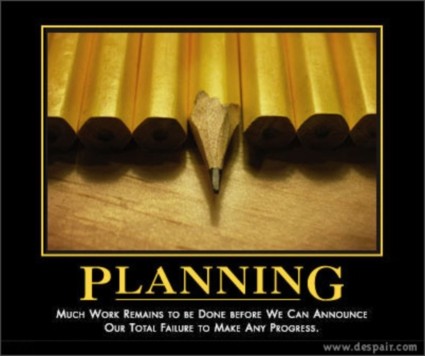
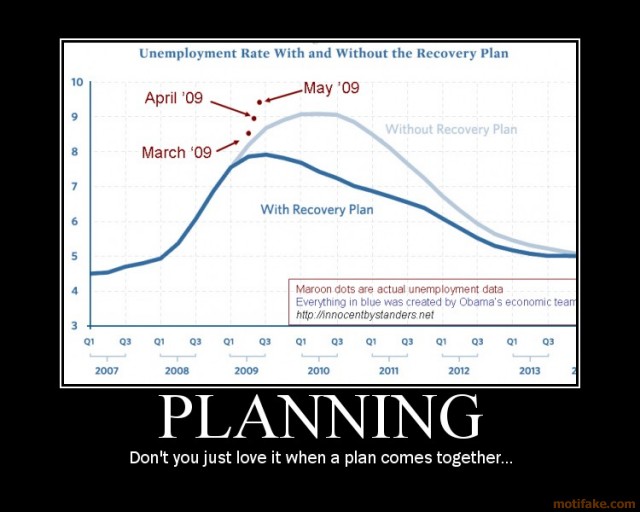
The purpose of planning is to increase predictability. Regardless of the name and the scope – strategy, plan, tactic, game-plan – the purpose is to avoid unpredictability. With the knowledge of Now, one seeks to make decisions into the future. The aim is to focus effort and to limit dispersement.
Sounds all good, perhaps. But there is a flip-side to this coin. When one focuses, one also limits and excludes.
In opting for predictability, you trade in intelligence, creativity and agility. By limiting future choices, you limit improvisation and potential genius. This is why most creative geniuses prefer not to work in large corporations or set structures, but rather in lean and mean startups or prefer to work on their own.
What you gain in focus and stability and predictability in the short run, you lose in attainment of long-term valuable skills.
To quote Ole Wiik, “one must practice what one wants to be good at”. As you focus your training in one area, you become less adept in other areas. Planning makes you better at planning. But it makes you less adept at improvising. By avoiding the unpredictable, you will never get good at tackling the unpredictable. Your mental dexterity will suffer proportionately with your increasing planning skills.
Another factor to consider is that decisions are always sharpest with the best and up-to-date data readily at hand. Thus, any decision made by planning, decisions into the future can never be potentially as good as a decision made in the Here and Now with fresh data and input. Limiting mental dexterity by planning and adding some blinders will make you less sharp mentally. Planning adds preferences, it adds filter that makes fresh input looks dimmer while you become dumber. In an interview with Chess.com, Magnus Carlsen said: “Having preferences means having weaknesses.”
Planning is a tool, a crutch. It enforces a view of the future based on today’s data. It stimulates preconceived ideas, adds a filter for new data, tend to help you avoid unpredictability and helps you never get good at tackling surprises. Tools and crutches are needed if you cannot cope with a situation without them. But right there it should make the alarm bells go off. Instead of getting addicted to the tool of planning, how about starting to practice tackling the unpredictable? Scary shit. I know. But it does add spice to life and skills to you.
She’s not only an amazing artist with a fantastic voice. Sandra Lyng is a warm and empathetic person with a strong will – a fighter with a tough determination to reach her goals and to deliver the goods. She is one of those people I have coached that understands an idea at once and swiftly transforms it into action and results – without hesitation. She may look the blonde, but she’s one smart cookie. And very funny.
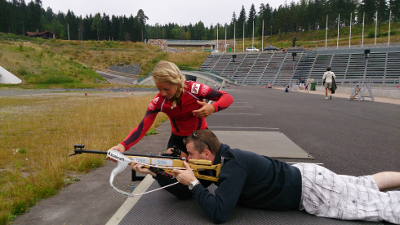
The one quality that stands out the most, is her willingness to help others. Like whipping me into shape – after yesterday’s training session, I can hardly move with muscle pain in odd new places. While I was exhausted, Sandra didn’t even work up a sweat. She’s way too fit.
Her latest song, “Don’t care” is just out on iTunes (Norway), Spotify and other other outlets. Here’s the song on Youtube:
I thought this quite pertinent for a discussion on this blog; copied from Slashdot:
Mathematician Edward Frenkel writes in the NYT that one fanciful possibility that explains why mathematics seems to permeate our universe is that we live in a computer simulation based on the laws of mathematics — not in what we commonly take to be the real world.
According to this theory, some highly advanced computer programmer of the future has devised this simulation, and we are unknowingly part of it. Thus when we discover a mathematical truth, we are simply discovering aspects of the code that the programmer used. This may strike you as very unlikely writes Frenkel but physicists have been creating their own computer simulations of the forces of nature for years — on a tiny scale, the size of an atomic nucleus. They use a three-dimensional grid to model a little chunk of the universe; then they run the program to see what happens.
“Oxford philosopher Nick Bostrom has argued that we are more likely to be in such a simulation than not,” writes Frenkel. “If such simulations are possible in theory, he reasons, then eventually humans will create them — presumably many of them. If this is so, in time there will be many more simulated worlds than nonsimulated ones.
Statistically speaking, therefore, we are more likely to be living in a simulated world than the real one.” The question now becomes is there any way to empirically test this hypothesis and the answer surprisingly is yes. In a recent paper, “Constraints on the Universe as a Numerical Simulation,” the physicists Silas R. Beane, Zohreh Davoudi and Martin J. Savage outline a possible method for detecting that our world is actually a computer simulation (PDF).
Recently I had the pleasure to meet with the leader of the main opposition party in Vietnam, Mr. Do Diem of the Viet Tan. He gave a talk to a small Vietnamese group living in Norway, and with the help of an inspiring person, Lap Huynh, I was invited to the event.
Through reading up on the country of Vietnam and with the help of Lap and Mr. Do, I can share some of the similarities I can see with a subject well known to most of my readers; The Church of Scientology.
Mike Rinder has compared the Church of Scientology (CoS) to North Korea. While the two can certainly be compared, the CoS compares much better to Vietnam. Here is why:
Both the CoS and Vietnam looks nice on the outside. The CoS looks posh, has Tom Cruise, John Travolta, glamorous buildings and nice, welcoming people. Vietnam is a wonderful tourist destination with gorgeous nature, great healthy food and nice welcoming people.
Both have a One Party Rule without tolerance for dissidents or free speech.
Both have severe punishments for those who dare stepping out of line.
Disconnection from people with opposing views is rampant in both.
Both have a growing insurgence and the people in power tries desperately to squash dissidents with similar tactics.
Both are heading for a free speech revolution where the ruling powers will face a meltdown.
Looking good on the outside, rotten on the inside and heading for a revolution.
The question for both is not whether it will be a revolution, but whether it will be violent.
I strongly support free speech and I will lend my support to the opposition in Vietnam.
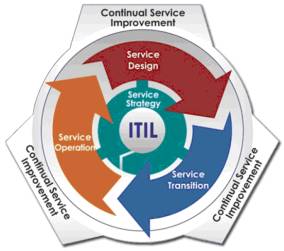
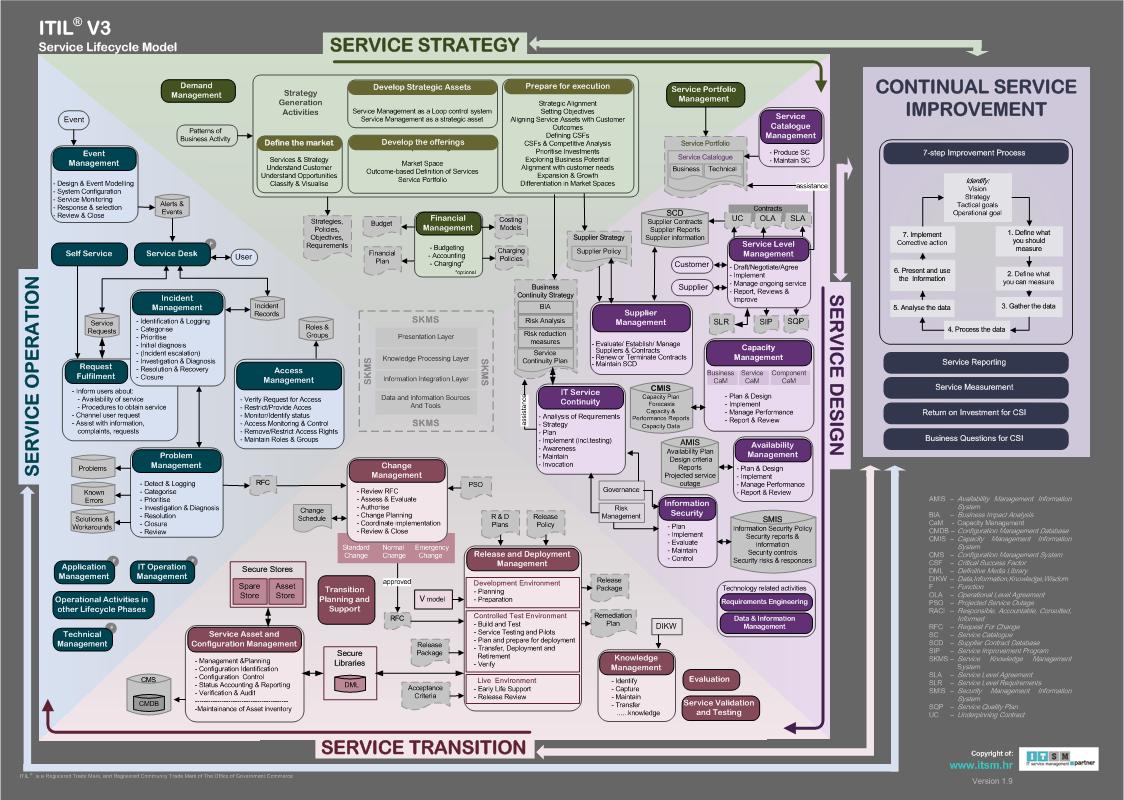
It comprises 5 books of Shakespearian English flanked by huge amounts of models, figures and diagrams. It is unwieldy and complex, leaving the reader in awe of its awesome.
ITIL has thousands of followers organized in country chapters of the IT Service Management Forum. Piles of papers are written every year, ITIL projects abound, and it remains a huge industry with vendors eager to leech off the ignorance of customers. And while organizations experience real IT challenges, they all too often jump to the conclusion that ITIL is the savior.
Problem with Peter.. Peter will not take responsibility? Enforce ITIL!
Trevor and Jack won’t work together? Go for ITIL!
Lack of IT documentation? ITIL!
Sandra shows lack of motivation? ITIL!!
Ben is a horrible manager? ITIL!!!
The less passionate employees are about their job, the less they feel a strong purpose, the less they take responsibility, the more ITIL seems required.
The ITIL congregation knows that it has the ultimate solution to every issue facing an IT organization. ITIL is the answer. Never mind the question. Bring out the Powerpoints and hard hitting argument. Oversell like mad and brainwash the customer into a true ITIL believer. The cult of ITIL rolls on in the all to recognizable self-serving fashion.
Sounds like Scientology, doesn’t it?
While the differences are obvious, the similarities are striking. Method before result. The tool becomes more important than the objective.
ITIL has been around since the early 90’s. My experience dates back to the early 2000’s. I used to be an ITIL evangelist, but the glare and glitter wore off along with my many ITIL projects. I did several high profile and very successful projects, but they often succeeded despite of ITIL rather than because of it.
Few ITIL projects succeed in making customers happy. Most fail due to some serious faults in the very foundations of the framework. Like the responsibility model, the complexity of the framework, the lack of true customer focus, the lack of real service focus, the lack of people focus. And above all, the belief that a certain method yields a certain result when the input is unknown. One should be very careful trying to implement a mindset of industrialization in the human spheres. What works splendid in a factory may wreck havoc on human initiative, creativity and motivation.
It is more important to help and motivate people than to enforce tools, processes, methods. The belief in the superior process rather than the superior will to deliver excellent results is the hallmark of a failed ITIL project.
People matters. More than the rest.
This is not to say that ITIL doesn’t have some excellent tools and tips. ITIL is good at describing the playing field and different typical
positions for people to play. It points to some good practices in dealing with IT issues, incoming requests, changes to systems that affect many, etc. But as with Scientology, one has to tread carefully in a minefield and wade through some rubbish to get to the good bits. As Scientology fosters a culture of irresponsibility, ITIL tends to do the same. Not by teaching irresponsibility per se, but by focusing so much on everything else as to leave little room for real empowerment and create a culture of self-thinking, responsible people with initiative and guts.
ITIL purports itself as “Best Practice“, but I was there when Sharon Taylor, the Chief Architect for ITIL version 3, said that the framework contains about 60% Best Practice and some 40% Wishful Thinking.
The best that Best Practice can do is to create followers. Leaders innovate, tread new ground and through guts and allowing themselves to fail come up with ingenious ways of doing things even better. Broad ideas and principles may be great guidelines, but when a framework becomes too detailed, it looses its punch and becomes a one-size-fits-few.
ITIL has created hoards of followers. Resembling a cult. But we don’t need cults. Rather than producing followers, one should strive to make everyone a leader in his own work area – even if the person leads only himself to deliver great results.
A few days ago I came across a blog post that was distributed by the LinkedIn news feed titled, “Top 5 ITSM Tips for 2014“. It reads like a gust from the past and serves well to underline what I wrote above. Tip #1 “Cost-effectively implement best practice ITSM” starts off with a whiff of fluffy business English:
“Implementing best-practice IT service management not only ensures you are improving customer satisfaction and relationships with better reliability and quality of service, it will also give your service desk a competitive advantage.”
Say what? Implementing this will ensure customer satisfaction? The answer is given. Don’t mind asking the customer. Maybe they don’t need anything even resembling ITIL. Maybe they don’t even need an IT department. Maybe they just need more care from the IT staff. Maybe something else entirely.
I don’t think the health profession was ever as narrow minded as this. Enter the doctor’s office. He has already decided what you need. Without even a second of examination. “You sir, is in dire need of an appendectomy!”
The article goes on with tip #2, “Measure your success”. Now this sounds very good. Except:
“Measuring the success of your IT service desk will become ever more crucial as senior management hone down on overspending and look at ways to cut costs.”
The IT service desk… What if the customer got such amazing IT that a service desk was hardly ever needed? How about instead asking the customers what they think about the IT services and measure that instead?
Then tip #3 reads “Manage ITIL like never before”. So, instead of managing customers, and IT staff, we are lead to believe that ITIL is something to manage. Actually, it is the thing to manage. You don’t really manage ITIL or even processes. It’s like stating that the soccer manager should manage ball passing like never before. Nope. Manage the players like there was no tomorrow.
“Deal with the increased demand for accelerated delivery” is tip #4. Sound advice as long as your customers needs are assessed and as long as you are not relying on rubber stamp conclusions from analysts. Your customers matters. More than Gartner statistics.
And finally, the sales pitch for the ITIL certification industry: “Qualify your team”. If that would only advise the reader to qualify your team toward what your customers really need. But no, it means getting your staff through multiple choice questionnaires to pass a theoretical exam. A great exercise to produce followers. A louse exercise to enable IT staff to handle customers better.
The article manages to miss the major point in making IT successful – that what is really needed is motivated people that take 100% responsibility for delivering amazing service to their customers. The area of IT thrives through creative genius, people with heart, people who give it all to deliver excellent products and services, interested staff, real and honest communication and people with guts.
ITIL is traditionally very introverted. Not surprising given it’s a framework for an industry overrepresented with people having a hard time picking up girls. More extroverted contributors have come on board in recent years, but as the framework piles on with complexity, it still suffers from the internal focus.
To enhance IT, we need to inspire dedicated customer focus and a culture marked by 100% responsibility.
A recent comment sparked motivation to write about the wonders of life.
As I see it, Earth is pretty close to Heaven as it is. We’ve got great challenges here, action, adventure, the stuff of movies that people fork out real money to watch. We’ve got trials and tribulations, love, hate, joy, anger, thrills, fears and even relaxing boredom. We enjoy the luxury of all the human emotions. We play them out. We take responsibility, we shirk responsibilities, we stress and get worked up, we’ve got real, engaging problems, sorrows and sense of mastery, crashes and the proud feeling of overcoming hardship. We get to work on life, set goals and to feel valuable. All this living has an enormous potential for liking and enjoyment. It’s massive. And something for every taste.
I wouldn’t want it much different, really. A world without downs has no real ups. The light stands out because of the darkness, and without the darkness, there is no amateur astronomy – or finding one’s own way back to the brighter days. If everyone would win, then the soccer games would suck. The balance of good and bad, love and hate, war and peace, good and evil, dark and light all makes for an interesting playing field where we get to strive for the good while enjoying the journey. And while we allow ourself to be tricked into believing that the goal is the destination, we may learn that the journey is the real destination, and that is truly worth loving. And every 70 years or so we get to reboot the game.









 Geir Isene - uncut