Let’s take a breather
Category Philosophy
The very wide field of philosophy
This is where I am at
…or even letting go without any forgiveness at all.
Religion is hurting spirituality
If a basis for spirituality is free will, then any enforced will, any dogma is hurting spirituality.
Any set belief will hamper the fluid nature of the spirit.
Religion is the enemy of spirituality, not science. Science is fluid in its search for truth as opposed to religiously dogmatic.

More on Antifragile and some on Scientology
I shared a video on Facebook yesterday that stired more than 50 comments in a very short time.
I posted this: “And we cling to our orderly rules and safe precautions. Who said we need traffic lights and stop signs.”
The video is pertinent to the book I’m reading, “Antifragile”. Let me know what you think.
On another note – Scientology: I have written many times that I believe anything can help a person – anything the person believes can help him. It is a matter of coercing the person into trusting a method or scheme or person or thing and he will admit that it helps him. And thus it does. The person is actually coerced into believing in his own powers to change his life on a via. It seems easier to coerce the person into trusting some via – some other, outer thing – than directly trusting his own abilities. Trusting his own requires more of that very scarce commodity called responsibility.
Now to my point: Scientology is a product of its times. Just as Hubbard was a man of his. The 50’s, 60’s and the 70’s. It is a new age religion that focus on the dangers of the cold war era, the imminent dangers of atomic war, the energy crisis, the us versus them of the US versus the Communists. The focus on Taylorism, whipping people into production, the worshiping of systems, of machine organizations, efficiency at any cost. All in the name of saving the world because the world is in such a dire need.
But not anymore. Scientology posed solutions to a different era. It is much harder to sell 40-year old solutions in today’s society. Especially when they are sold as fixed, permanent and timeless solutions to any problem imaginable. Thus it becomes harder by the year to coerce a person into unleashing his inner powers via Scientology. Other, more modern coercions is emerging and more will come.
Wassup?
Been busy lately. With moving into our new home, with interesting new projects, with coaching some amazing people. And so it has been quiet here on the blog. But I’ve got a new idea – what about writing a short blog post every day? Unfiltered thoughts, relating my everyday experiences or whatever pops to my mind. I will try it and see what happens.

The view from our new place – great for my telescope 🙂
Brendan suggested I read the book “Antifragile“. A life-changer. What’s the opposite of “fragile”? Most people replies “robust” or some synonym. But no, that’s not the opposite of “fragile”. If you think of a scale from -1 (fragile) to +1, the “robust would be zero. On the minus side of the scale we find the stuff that is harmed by shock or sudden change – like a fragile vase accelerating toward the floor. Stuff that are not harmed are in the middel of the scale, while stuff that benefit from shock or sudden change is on the plus side. While the story of Hercules beheading Hydra only to see two heads replace the former head neatly illustrated the plus side, there are more common-day examples. Like your body. Exercising your body breaks down muscle fibre resulting in a better body. Stuff that adapts, adopts, learn from getting hurt are “antifragile”. And that is far above something “robust”. And people can be fragile. Or robust. Or antifragile. I aim for the latter and have been for a few years.
It actually got me thinking about how I could benefit from the ultimate harm. Got me thinking about death. And I find myself not fearing death. Rather, I am intrigued by it. I really wonder what it will bring. I’m almost excited about that change, whenever it will come. A friend of mine, Egil Möller once said that he believed the purpose of life was to come to peace with death. Interesting.
Apart from my recent personal philosophical explorations, I have been doing some interesting projects in Å. Currently, I am involved in a few projects at Bærum Kommune (one of Norway’s major municipalities) where I am facilitating a cultural change toward 100% responsibility and focus on Deliverables rather than Tasks (ref. my article “Processes, Automation and Human Potential“). I have also been writing their IT strategy for the next 6 years and proposing a steering and financial model. I also concluded a three month project with Altinn (Norway’s governmental digital data hub) last week. Apparently I moved some people in that organization – one person started crying as he stood up during the dinner to thank me for the project. He’s a great guy and I think he finally understood what a great guy he is.
On the coaching side, I have been working with a dozen people simultaneously for a few months with several concluding during the past weeks. One guy, a 16-year old was suicidal when we first met half a year ago. We established a scale from -3 to +3, reporting every day how the day was. A score of -3 would be “I want to kill myself”, a -2 would be a really bad day, -1 a shitty day, zero would be a “who cares”-day, a +1 equals a good day, a +2 a really good day and a +3 would be a spectacular day. We quickly got up from -3/-2 to an average of -0.5. Now he is regularly reporting +2 and very seldom as low as zero. So, it can be done.
Also, Anette and I met with Dan Koon yesterday. That was fun. Dan is an amazing person. I am hoping to do some fun stuff with him in the near future.
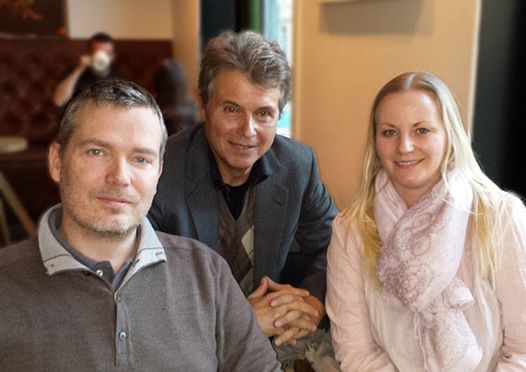
I will probably write shorter posts than this on a daily basis. While on vacation during the next few days, I will write short posts from my mobile phone. Wonder how that will turn out. Up into the mountain we go – stay tuned for pictures 🙂
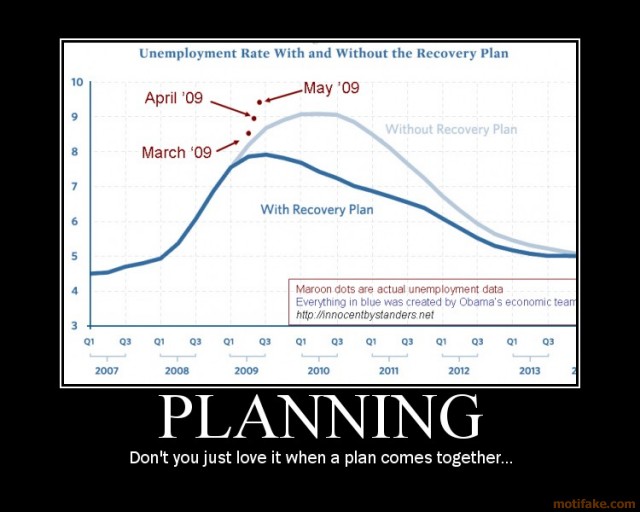
Planning: Trading predictability for intelligence
“I spent hours meticulously drawing an old castle, three levels of floor plans and carefully populating every room with Orcs, Trolls, Undeads and treasure. But even more hours was invested in planning how the players would approach the castle with their Role-Playing characters. The front doors would be unlocked and the characters would discover that, sneak inside, engage in a small fight with two filthy Orcs playing dice instead of guarding the castle, commence to the guard room, find a treasure, get surprised by a lutenant Orc walking into the room, etc. The plan was a masterpiece, but upon reaching the castle, I was taken completely off guard. They walked around to the back side, got out a grappling hook and climbed in through a small kitchen window on the second floor and… completely wrecked my plan! Dang! I hated unpredictable players.”

The purpose of planning is to increase predictability. Regardless of the name and the scope – strategy, plan, tactic, game-plan – the purpose is to avoid unpredictability. With the knowledge of Now, one seeks to make decisions into the future. The aim is to focus effort and to limit dispersement.
Sounds all good, perhaps. But there is a flip-side to this coin. When one focuses, one also limits and excludes.

In opting for predictability, you trade in intelligence, creativity and agility. By limiting future choices, you limit improvisation and potential genius. This is why most creative geniuses prefer not to work in large corporations or set structures, but rather in lean and mean startups or prefer to work on their own.
What you gain in focus and stability and predictability in the short run, you lose in attainment of long-term valuable skills.
To quote Ole Wiik, “one must practice what one wants to be good at”. As you focus your training in one area, you become less adept in other areas. Planning makes you better at planning. But it makes you less adept at improvising. By avoiding the unpredictable, you will never get good at tackling the unpredictable. Your mental dexterity will suffer proportionately with your increasing planning skills.
Another factor to consider is that decisions are always sharpest with the best and up-to-date data readily at hand. Thus, any decision made by planning, decisions into the future can never be potentially as good as a decision made in the Here and Now with fresh data and input. Limiting mental dexterity by planning and adding some blinders will make you less sharp mentally. Planning adds preferences, it adds filter that makes fresh input looks dimmer while you become dumber. In an interview with Chess.com, Magnus Carlsen said: “Having preferences means having weaknesses.”

Planning is a tool, a crutch. It enforces a view of the future based on today’s data. It stimulates preconceived ideas, adds a filter for new data, tend to help you avoid unpredictability and helps you never get good at tackling surprises. Tools and crutches are needed if you cannot cope with a situation without them. But right there it should make the alarm bells go off. Instead of getting addicted to the tool of planning, how about starting to practice tackling the unpredictable? Scary shit. I know. But it does add spice to life and skills to you.

Is our universe really a giant computer simulation?
I thought this quite pertinent for a discussion on this blog; copied from Slashdot:
Mathematician Edward Frenkel writes in the NYT that one fanciful possibility that explains why mathematics seems to permeate our universe is that we live in a computer simulation based on the laws of mathematics — not in what we commonly take to be the real world.

According to this theory, some highly advanced computer programmer of the future has devised this simulation, and we are unknowingly part of it. Thus when we discover a mathematical truth, we are simply discovering aspects of the code that the programmer used. This may strike you as very unlikely writes Frenkel but physicists have been creating their own computer simulations of the forces of nature for years — on a tiny scale, the size of an atomic nucleus. They use a three-dimensional grid to model a little chunk of the universe; then they run the program to see what happens.
“Oxford philosopher Nick Bostrom has argued that we are more likely to be in such a simulation than not,” writes Frenkel. “If such simulations are possible in theory, he reasons, then eventually humans will create them — presumably many of them. If this is so, in time there will be many more simulated worlds than nonsimulated ones.
Statistically speaking, therefore, we are more likely to be living in a simulated world than the real one.” The question now becomes is there any way to empirically test this hypothesis and the answer surprisingly is yes. In a recent paper, “Constraints on the Universe as a Numerical Simulation,” the physicists Silas R. Beane, Zohreh Davoudi and Martin J. Savage outline a possible method for detecting that our world is actually a computer simulation (PDF).
Savage and his colleagues assume that any future simulators would use some of the same techniques current scientists use to run simulations, with the same constraints. The future simulators, Savage indicated, would map their universe on a mathematical lattice or grid, consisting of points and lines. But computer simulations generate slight but distinctive anomalies — certain kinds of asymmetries and they suggest that a closer look at cosmic rays may reveal similar asymmetries. If so, this would indicate that we might — just might — ourselves be in someone else”s computer simulation.
The wonders of life
A recent comment sparked motivation to write about the wonders of life.
As I see it, Earth is pretty close to Heaven as it is. We’ve got great challenges here, action, adventure, the stuff of movies that people fork out real money to watch. We’ve got trials and tribulations, love, hate, joy, anger, thrills, fears and even relaxing boredom. We enjoy the luxury of all the human emotions. We play them out. We take responsibility, we shirk responsibilities, we stress and get worked up, we’ve got real, engaging problems, sorrows and sense of mastery, crashes and the proud feeling of overcoming hardship. We get to work on life, set goals and to feel valuable. All this living has an enormous potential for liking and enjoyment. It’s massive. And something for every taste.
I wouldn’t want it much different, really. A world without downs has no real ups. The light stands out because of the darkness, and without the darkness, there is no amateur astronomy – or finding one’s own way back to the brighter days. If everyone would win, then the soccer games would suck. The balance of good and bad, love and hate, war and peace, good and evil, dark and light all makes for an interesting playing field where we get to strive for the good while enjoying the journey. And while we allow ourself to be tricked into believing that the goal is the destination, we may learn that the journey is the real destination, and that is truly worth loving. And every 70 years or so we get to reboot the game.

It’s an amazing setup. Make the best of it. Enjoy the ride. It’s a choice.
Religion: Beliefs, facts and the Internet
The Internet killed Scientology.
It is possible to make a closed belief system thrive and expand in the absence of open access to facts. North Korea as rather successful in its push. China less so, though they have been eager to control the flow of communication.
Religions have long been able to sell beliefs contrary to fact by relying on empathy or force, group pressure or by pushing belief in tools designed to solve personal problems. Scientology is no different. Except Scientology came very late to the show. And it got blasted by open access to facts, freedom of expression, of criticism and exchange of ideas. It got hit by the Internet before it really got off the ground. And I think it serves well as a micro-example of the fate of closed belief systems.
Beliefs tend to fuel discussions, facts tend to defuse it.

And as Scientology finds itself being defused by the Internet, so will other, larger religions. But since the large religions are more established with a longer history, they will take longer to fade by exposure to the Net. But they will fade.
Proven methods will rule, even very workable methods that are currently suppressed by the mainstream will thrive and expand.
Openness and free exchange of ideas and facts drives all kinds of changes. It decentralizes power. It upsets establishments. It makes for a faster-paced world where old, closed belief systems are challenged and eventually die. The big religions can look at what has happened to Scientology and predict their future.

How the Internet changed the game (from NPR):

Why this blog is suppressive
In Scientology, suppression is defined as:
“A harmful intention or action against which one cannot fight back.”
A Suppressive Person (SP) is defined as:
“one that actively seeks to suppress or damage Scientology or a Scientologist by suppressive acts.”
and
“A person with certain behavior characteristics and who suppresses other people in his vicinity and those other people when he suppresses them become PTS or Potential Trouble Sources.”
And as you can see, a person affected negatively by suppression is termed a Potential Trouble Source (PTS):
“it means someone connected to a person or group opposed to Scientology. It results in illness and roller-coaster and is the cause of illness and roller-coaster.”
and
“a person […] who “roller-coasters,” i.e., gets better, then worse. This occurs only when his connection to a suppressive person or group is unhandled and he must, in order to make his gains from Scientology permanent, receive processing intended to handle such.”

So, working backward, a person that is involved in Scientology and experiences impermanent gains from it, is connected to a Suppressive person or group. This is somewhat peculiar to Scientology in that the gains are not really permanent, like with physical or other mental training. It’s not like you would expect a person to lose his ability to multiply, to do trigonometry or to ski if he were to be connected to someone opposing those activities in his life. Sure, he could lose motivation and momentum and drop out from his training, and then the skills would corrode. But to suddenly lose his ability to communicate or his ability to recognize the source of problems in life? A person who has audited out all his BTs and then becomes the target of suppression… does the BTs return? Now that is odd.
Could it be that the gains in Scientology actually comes from skillful application of the placebo effect? That the gains are to be had because one really belives one deserve them? And that deep inside we all carry the ability to change our lives if we really can muster the motivation and belief that we can? And that this motivation comes about only when we feel we deserve it?
Is Scientology gains dependent upon the person’s belief, conviction or “inner knowingness”? It would surely answer the conundrum of why one can so easily “lose gains” in Scientology.
Could it be that the scientific cloaking serves to enforce belief in its efficacy? Could the religious cloaking serve the same purpose to different target groups? The time spent surely would enforce one’s conviction that It Works. The same with all the money spent. How about the stringent management, the uniforms, the tough schedules, the bombast, the posh, celebrities and grand PR? And the guru worship? It really does seem like an impressive package that could make a believer out of most anyone. And if we do hold the powers to heal our mind and spirit, one could hardly blame the Scientology scheme for tricking the subjects into unleashing their inner powers.
![Question_Everything_by_Victawr[19]](https://isene.me/wp-content/uploads/2014/01/question_everything_by_victawr19.jpg)
On this blog I challenge Scientology beliefs. I question everything myself, and I write about it as I go along. I challenge the practice, the philosophy, the gains, the OT levels, Clear and anything else that turns up as I turn every stone. Scientologists who read this may end up questioning their own beliefs and even lose some gains. And in that aspect, this blog can indeed be looked upon as suppressive. While blogging my Scientology journey has been a great process for me, a nagging doubt remains:
Is it right to challenge another’s belief with facts, if the belief they hold serves to make their life better?
It’s a complex question and I have many views on this. But I would like to hear what you think.
 Geir Isene - uncut