The games of life

What defines a game?

Purpose.

Purpose explains a game. It delimits a game. It makes the game.

A game is anything defined by at least one purpose – a computer game, a game of chess, watching a movie, a project or job, a relationship, family – even life itself. Different participants in a game have different purposes. While the sum of the purposes defines a common game, each person ha his own version of that game – defined by his purpose(s).

So when we talk about the importance of being able “to let go“, what are we letting go of? When a person is stuck in loss of girlfriend or enraged by loosing his job, he needs to be able to say “fuck it” and let it go. But what is “it”? The now ex-girlfriend? The job he had? No. The ex-girlfriend represented a game. The job was another game. Both had a defining purpose, and that is what he needs to let go of.

To enjoy the games we play, it is important to manufacture purposes, to give life to the games in order to reap the benefits – experiences and emotions. It is equally important to be able to stop creating a purpose – to let it go. Freedom is achieved by the ability to create and not create purposes, to go into and out of games freely.

Pride, ego and “having to be right” makes it harder to letting go and to create new purposes.

In order to get the full benefits of a game, one has to give value to that purpose. The more valuable a purpose is, the more serious the stakes are, the more benefits can be harvested. Self suggestion becomes an integral part. But one can get to the point where a game gets too real and becomes overwhelming. That’s when you pull out the tool called “fuck it”. Even when you die. But until that time you might as well get maximum enjoyment out of the games of life.

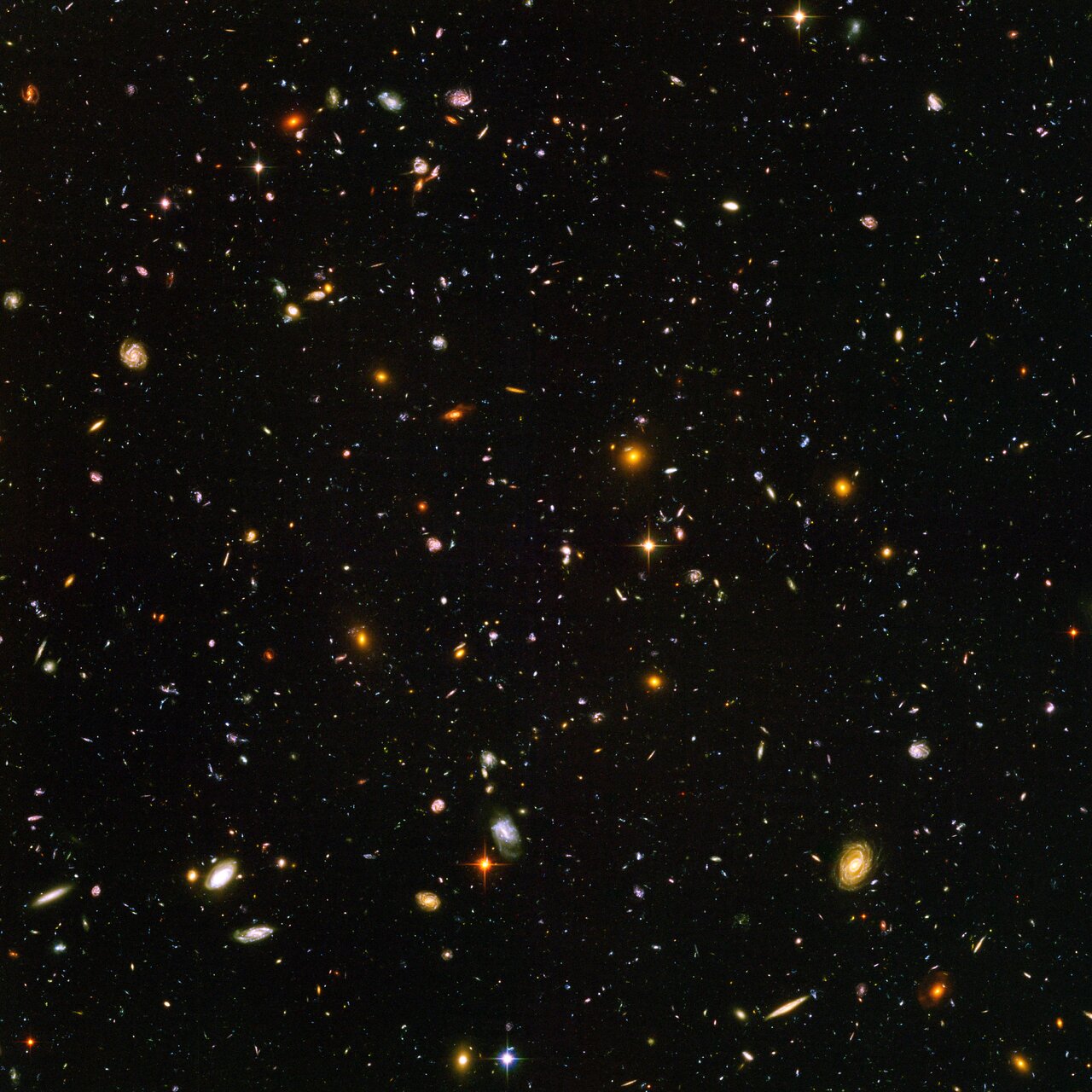
Picture taken from my balcony with Sony Xperia Z3

Picture taken from my balcony with Sony Xperia Z3

Give more than you take

Today I was looking at what makes my life work well. The results I create come from the actions I do. My actions come from my decisions. And my decisions come from my attitudes, my values. So, I started looking at my values in life, and though they count dozens, there would be one central, major value that I can consider core. I came to this:

“Give more than you take”

I could add, “Take lots, but give even more”.

That sums it up for me.

Purpose and life

Purpose plays an important part in the article, “Processes, automation and human potential“.

Purpose gives life. Purpose drives life. The meaning of life is determined by the purposes that drives us. As I see it, we are free to give life any meaning we choose through the purposes we elect. And this may well be the only meaning life has. So diverse and complicated, yet so feeble.

In my experience in coaching struggling young people, lack of purpose is one major reason why a person could consider ending his life. While a strong purpose gives life, a lack of purpose results in a lack of life.

trees_forest_path_fog_mist_grayscale_roads_monochrome_desktop_1680x1050_hd-wallpaper-569001

When a person looses a strong purpose, a valuable desire, the person “dies” to that degree. It doesn’t seem to matter what the purpose is, or whether it is a “good” purpose. A soldier returning from a war has lost a purpose to fight. When the Islamic State is defeated, a lot of people will loose a strong purpose. Loosing a job is a loss of purpose. Loosing a loved one. Being kicked out of a team. Or loosing the tools or means to achieve a purpose. They all amount to loosing some zest in life.

Having the purpose to go spiritually free or “salvaging the planet” and then thinking that it can no longer be done as one leaves the Church of Scientology – that amounts to a big loss. And it doesn’t matter that the purpose was unrealistic or the tools crappy or crazy. It still leaves the person mentally darker. It is a tough blow. And falling from such high and strong purposes, it can be really hard to mount comparable purposes to regain the level of zest and thrust.

The ability to find meaning, to create meaning in life is perhaps the most important of all abilities. Children excel at this. Adults less so. But I believe this ability can be exercised like any other ability. Training oneself to create meaning, purposes, desires and then going for it amounts to training oneself to live. Getting closer to achieving your purposes generates happiness. Happiness is a basic purpose, a good reason for living 🙂 But remember – achieving a purpose is also a loss of purpose. This is why one should excercise oneself to be ready to give new meaning to life by setting new goals.

Brikbag__051-1024x795

Try this

Go to a random shopping mall, café or public place. Approach a random person and ask if you can buy him a cup of coffee and if he has an hour to spare. Tell the person you will invest the next hour trying to help him – in any way you can – with no strings attached. You will not need to know the person’s name or contact information. You ask nothing in return. Nothing at all.

If the person agrees, commence with helping the person during that one hour. Figure out something you can help him with and do whatever that will be of benefit. When the hour is up, you’re done.

If you have done a really good job, the person will ask if you can help him more. Then you say, “Yes I ca,n help you another hour – but only if you help 5 other people just like I have now helped you. Five people, one hour each. When you have done that, you can get back to me. Here’s my contact information.“.

If the person returns after helping five random people, give the person another hour of honest help. You will often find that the person will benefit more from helping others than you will be able to help him.

If you do this with at least a dozen people, I would very much like to hear how you did.

reaching_out

What to take responsibility for

When I coach people, the main positive step occurs when the person stops feeling responsible for what other people think or feel and starts taking responsibility for what he or she thinks and feels.

Taking full responsibility for one’s own thinking, feelings and actions is liberating. Further freedom comes from stopping the worrying about what others might think.

One creates one’s own thoughts and feelings. What one thinks and feels is a choice. Always – even when it doesn’t seem like it. To conquer one’s own thoughts and emotions is hard. But it is a worthwhile quest.

When I read this post to Anette, she asked if I should include some practical examples where this viewpoint would be benificial. Then she added, “…or maybe you should ask your readers for good examples?” And so I do.

thinking

HyperList version 2.3. Hashtags, graphing and more

I am proud to present the latest HyperList release – version 2.3.

HyperList now accommodates Twitter-type hashtags (called simply “tags” in HyperList – prompting a renaming of the old type of HyperList tags to “properties”). References are changed and so is Change Markup. And then there are a few minor fixes.

The VIM HyperList plugin is updated and released over at vim.org.

Apart from these enhancements (and more), there’s a real treat in the mix: Hypergraph.

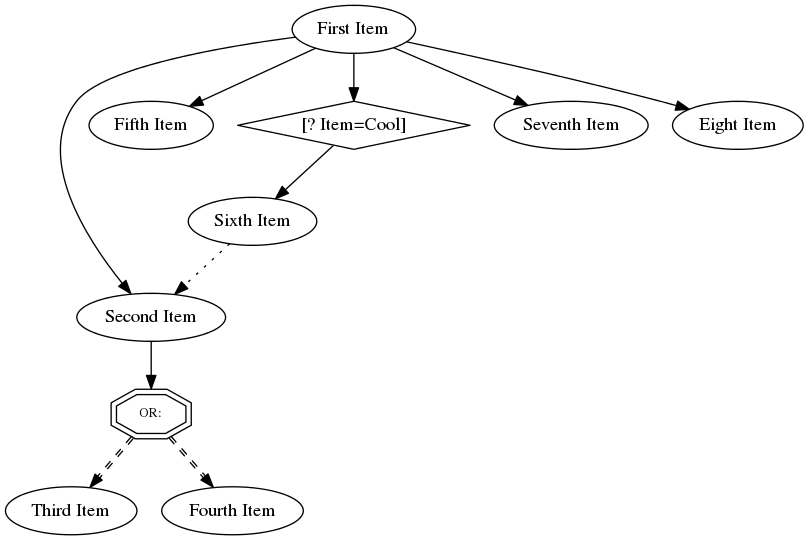
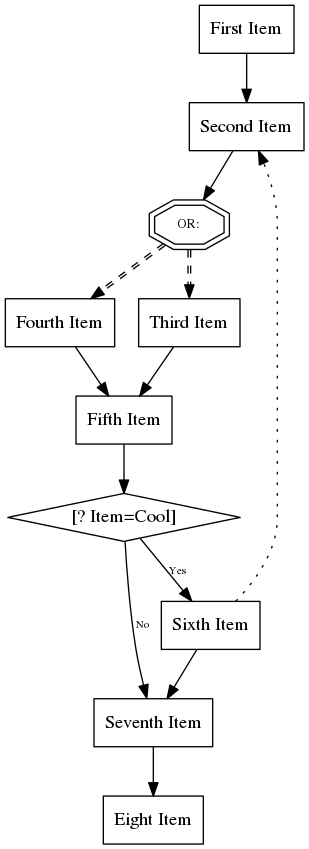
You can now automatically graph a HyperList as either a mindmap (for HyperLists that are State descriptions) or a flowchart (for HyperLists that are Transitions descriptions). An example should suffice – this dummy HyperList:


First Item
    Second Item; OR:
        Third Item
        Fourth Item
    Fifth Item
    [? Item=Cool] Sixth Item (<Second Item>)
    Seventh Item
    Eighth Item

Graphed as a State (mindmap):
test_state

Graphed as a Transition (flowchart):
test_trans

HyperGraph is a rather complex endeavour. It works but you may encounter some snags. If you do, drop me a line and I will fix.

Visit the HyperList page to download the HyperList document and the new HyperGraph script.

Infinity…

Some quick questions up for discussion:

  • Is infinity pluss one the same as infinity?
  • Is infinity times two the same as infinity?
  • What is infinity minus infinity?
  • What is infinity divided by infinity?
  • Is the reciprocal of infinity equal to zero?
  • Can something infinite have a beginning?

Embrace the conflicts

Today I attended KPMG’s Executive Conference here in Oslo. Among the speakers were Fareed Zakaria (CNN anchor), Anders Fogh Rasmussen (12th NATO Secretary General) and Børge Brende (our Foreign Minister). The title of the conference: “International conflicts – Business Impact“.

kpmg

The speakers gave interesting insights into the history and status on current world conflicts and how they influence world business. The angles were intelligent and wise, covering in particular the many conflicts in the Middle-East and the war in eastern Ukraine. The seriousness of the conflicts, their problems and negative impacts were in focus. The consequences to human lives, trade and business and to world economy were highlighted. Solutions were discussed.

The prosperity of the West with capitalism as the vehicle for success was covered in some detail. The element of competition was praised as the central driving force of capitalism. It was a package of excellent content wrapped in a sober and well prepared form. Short of a representative from Al-Qaeda, nothing seemed to be missing.

Except an embracing of conflicts. Not the most horrific conflicts where children are victims of violence. But the world needs risk. It needs danger.

While most people would want a world without conflicts, they get quite pensive when they stop to really contemplate a completely peaceful world robbed of any conflict, of any and all crimes, and of all but the most mundane challenges. While the Western world owes much of its recent success to the inherent conflict in capitalism, the speakers didn’t express the relevant point that mankind owes much also to its more violent conflicts.

ira

When Brendan and I recently met with the IRA, I realized that while the peace treaty of Northern Ireland saved the lives of so many people, it also came with a cost, a tangible downside. With less to fight for, with less to die and live for, life becomes less challenging and more dull. And with dullness comes boredom and ultimately even depression.

Perhaps what most people want is the wanting of a goal and not the goal itself.

What’s the point, if any?

We haven’t had an open discussion yet on this blog as to what the purpose is for life, the universe and everything.

There are lots of answers ranging from “the purpose is unknown” and various specific general or personal purposes to “no purpose”.

I’d like to invite an open discussion about the reason(s) for it all.

So; What’s the point, if any?